
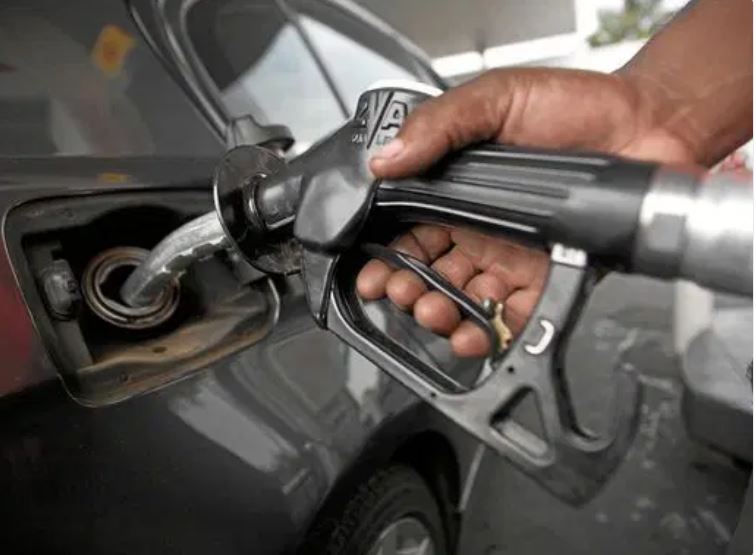
In spite of the drop in crude oil prices to $100 per barrel from $130 per barrel, oil marketers have continued to sell Premium Motor Spirit, PMS, also known as petrol at N1,300 per litre and above across the country
Crude oil prices began to decline amid expectations that ongoing diplomatic engagements between the US and Iran could lead to the return of Iranian oil into Asian markets in the coming weeks.
However, investigations by Vanguard in Lagos and its environs yesterday, showed that marketers have not adjusted pump prices, in line with developments in the global oil market.
The checks indicated that several retail outlets, including MRS, sold petrol at N1,333 per litre, while depot prices remained slightly lower.
Depot operators, such as Alkanes, Soroman, and Bovas, sold the product at about N1,270 per litre, while Dangote Petroleum Refinery priced its product at N1,285 per litre.
In Abuja, the situation was not different, with petrol stations maintaining high prices of up to N1,371 per litre, even more than 24 hours after the decline in global crude prices.
Findings showed that outlets such as NIPCO and AYM Shafa sold at N1,371 and N1,370 per litre, respectively, among the highest in the Federal Capital Territory.
NNPC Retail stations maintained prices around N1,361 per litre, while MRS (a Dangote partner station) sold at N1,367 per litre.
This development has raised concerns among consumers who expected a reduction in pump prices, following the drop in crude oil prices.
Over the past three weeks, petrol prices in Abuja have surged by more than 50 per cent, driven largely by successive increases in gantry prices by Dangote Refinery.
The decision by marketers to retain high prices has further worsened the burden on Nigerians already grappling with rising transportation and living costs.
Retailers should adjust price
— Attendant
A pump attendant at AA Rano filling station in Karu, told Vanguard that pricing decisions are the responsibility of station management.
“Sir, it is not my job to change the metre. That is the work of the manager and the engineer,” the attendant, who preferred anonymity, said.
Regulators should intervene — Petroleumprice.ng
Reacting to the persistent high price of petrol, the CEO of Petroleumprice.ng, Olatide Jeremiah, called on regulators to protect consumers from exploitation.
“The oil price has been dropping in recent days, yet Nigerians have not seen a corresponding reduction in pump prices. This has worsened instability in the downstream sector.
“The Nigerian Midstream and Downstream Petroleum Regulatory Authority, NMDPRA, and the Federal Competition and Consumer Protection Commission, FCCPC, need to protect consumers from exploitation, as marketers are quick to increase prices but slow to reduce them, thereby making abnormal profits at the expense of Nigerians,” he said.
Market forces should determine price — PETROAN
On his part, the President of the Petroleum Products Retail Outlets Owners Association of Nigeria, PETROAN, Billy Gillis-Harry, maintained that pricing should be left to market forces.
“This is a deregulated market, and the forces of demand and supply should be allowed to guide operations,” he said.
On why prices of petroleum products remained high, despite the drop in crude prices, depot owners refused to comment.
Transport fares rise by 50%
Meanwhile, transport operators have passed on the increased cost of fuel to commuters, whose purchasing power continues to drop on a daily basis.
A civil servant, who spoke anonymously, said: “Before the Middle East conflict, we paid N800 from Ikorodu to Oshodi. Now, we pay about N1,200, representing a 50 per cent increase.”
He described the situation as unbearable, noting that salaries remained stagnant, despite rising inflation and living costs.
Industry experts highlight risks, opportunities
Speaking at the just-concluded webinar hosted by the Major Energies Marketers Association of Nigeria, MEMAN, in partnership with S&P Global Energy, MEMAN Chairman, Huub Stokman, said the Middle East crisis heightened uncertainty in global oil markets.
According to him, the situation has led to increased volatility in oil prices, higher freight costs and disruptions in global supply chains.
He added that while these developments posed challenges for consumers and downstream operators, they also presented an opportunity for Nigeria to position itself as a regional energy hub, given its high-quality crude, growing refining capacity and large domestic market.
S&P Global Energy’s Associate Editorial Director, Gary Clark, noted that refining margins for products, such as diesel and aviation fuel, had risen sharply due to supply disruptions and increased risk premiums.
Similarly, Stanislas Drochon, Africa Head of Fuels and Refining at S&P Global Energy, said Sub-Saharan Africa remained vulnerable to external shocks due to heavy reliance on imports, limited refining capacity and inadequate storage infrastructure.
He called for sustained investment in supply chain systems to improve long-term energy security.
Energy expert, Joe Nwakwue, also described Nigeria’s transition to a deregulated downstream market as a period of adjustment characterised by price volatility and structural changes.