
By Uche Amunike
‘Mr. President, perception is everything.’
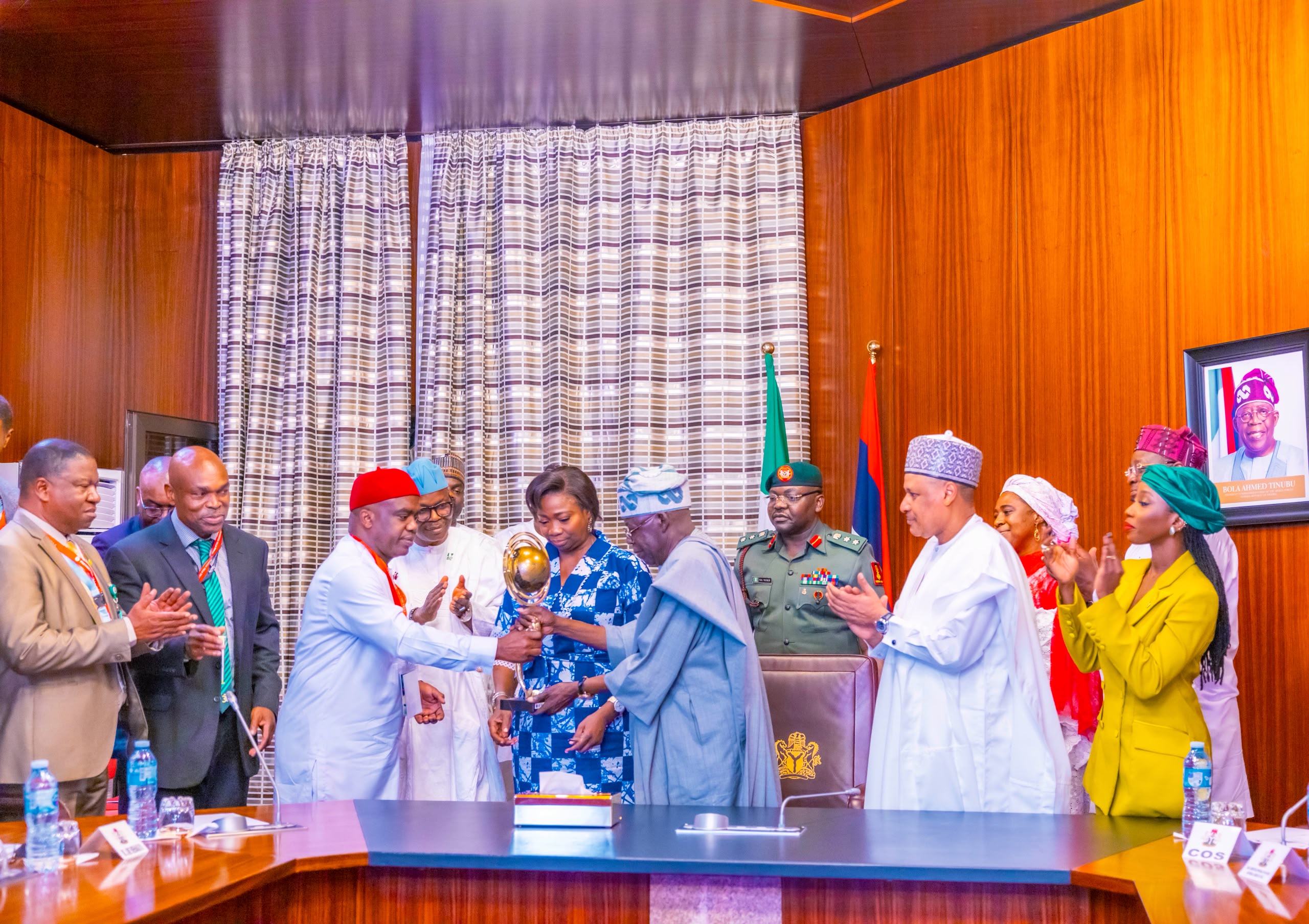
Those four words hung in the air as Chief Chike Nweke addressed President Bola Ahmed Tinubu ahead of the Nigerians in Diaspora Commission (NiDCOM) National Diaspora Merit Awards ceremony. They were simple, yet they carried the weight of decades of conviction, sacrifice and unwavering belief in a different Nigeria—one the world seldom gets to see. For many in the room, it was another speech before a presidential engagement. But for those who have followed Nweke’s journey over the years, it was the culmination of a mission that began long before the word ‘diaspora’ became a fashionable part of Nigeria’s political vocabulary.
It was the story of a man who refused to accept that Nigeria should be defined solely by tales of corruption, fraud, insecurity and failed leadership. Instead, he chose to dedicate his life to telling another story—one of excellence, resilience, innovation and global achievement.
That conviction would eventually become Life and Times, a publication that has spent the last fifteen years documenting the remarkable accomplishments of Nigerians at home and across the world.
Ironically, the recognition that brought him before President Tinubu came from an institution whose birth he had passionately advocated years earlier.
As he spoke before the President, Chief Nweke looked beyond the ceremony itself. His concern was not merely about receiving an award; it was about correcting a narrative that, in his view, has done enormous damage to Nigeria’s image across the globe.
‘Perception is everything,’ he repeated, before painting a picture of a nation whose greatest ambassadors often remain invisible.
He reminded the President that in the United States, one out of every four Black physicians is Nigerian—a remarkable statistic that rarely dominates international headlines. Instead, stories about crime, corruption and advance-fee fraud continue to shape how many outsiders perceive Africa’s most populous nation. To him, this imbalance has never reflected reality.
Across continents, Nigerians are building businesses, leading multinational corporations, transforming healthcare, advancing science, influencing literature and shaping public policy. Yet, according to him, these stories rarely receive the attention they deserve. He cited renowned investment banker Adebayo Ogunlesi, whose influence extends into global infrastructure, including ownership interests in London’s Gatwick Airport. He spoke of businessman Kase Lawal, who built one of America’s largest Black-owned energy companies, and celebrated internationally acclaimed author Chimamanda Ngozi Adichie, whose books have challenged stereotypes while giving Africa a stronger literary voice on the world stage.
For him, these personalities are not isolated success stories. They represent millions of Nigerians quietly making extraordinary contributions across the globe while carrying the country’s flag with distinction.
Unfortunately, he believes the world hears too little about them. Instead, negative headlines often drown out stories of excellence. That belief has shaped almost every major decision he has made in public life.
Long before the establishment of the Nigerians in Diaspora Commission, Nweke had become convinced that Nigeria needed a structured institution dedicated to engaging its citizens abroad—not merely as remittance senders, but as strategic partners in national development.
Recalling those early years, he paid tribute to Hon. (Dr.) Abike Dabiri-Erewa, who was then serving in the Presidency with responsibility for diaspora affairs.
Together with other stakeholders, they consistently advocated for the creation of a commission that would give Nigerians abroad an official platform for engagement with their homeland.
‘When it finally came to pass, he reflected, ‘we were so happy.’
It was more than a policy victory. It was the beginning of an organized effort to ensure that Nigerians scattered across the globe would no longer remain disconnected from the country’s development aspirations.
For Nweke, however, building institutions alone was never enough. Changing perceptions required changing stories. That understanding inspired another vision.
If mainstream conversations about Nigeria focused overwhelmingly on failure, then someone needed to deliberately document success.
Someone had to tell the stories others ignored. Someone had to remind Nigerians—and the rest of the world—that the country’s greatest export was not scandal, but people.
That vision gave birth to Life and Times.
From its earliest editions, the publication adopted a clear editorial philosophy: celebrate Nigerians making meaningful contributions both at home and abroad.
It was a bold editorial choice at a time when sensational headlines often attracted greater public attention than stories of achievement.
Yet Nweke remained convinced that journalism should do more than report crises. It should also preserve hope. It should inspire confidence. Above all, it should tell the complete story of a nation.
If Chief Chike Nweke’s words before President Bola Ahmed Tinubu explained the ‘why’ behind his life’s work, what happened afterwards affirmed that the mission had not gone unnoticed.
When dignitaries gathered for the Nigerians in Diaspora Commission (NiDCOM) National Diaspora Merit Awards, the atmosphere was one of celebration. It was a gathering of Nigerians whose contributions, whether at home or abroad, had helped strengthen the nation’s image and deepen its global influence.
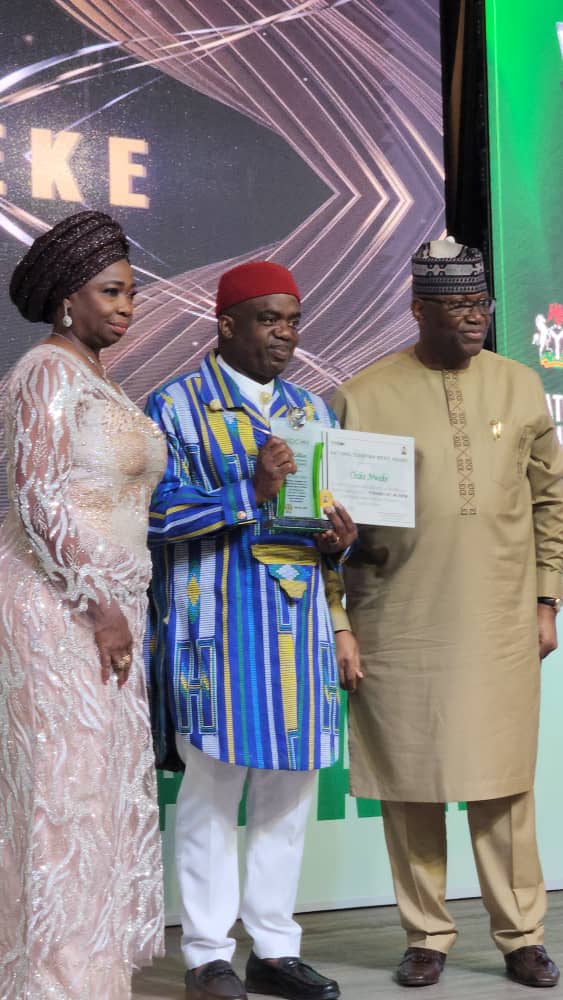
It was therefore not a surprise that Chief Chike Nweke, Publisher and Chairman of Life and Times, was among those recognized, having spent years ensuring that the successes of Nigerians received the same prominence as the country’s challenges.
His recognition was significant not because he owns a media organization, but because he had consistently used journalism as an instrument of nation-building.
For fifteen years, Life and Times has deliberately shone a light on Nigerian entrepreneurs, medical professionals, scholars, inventors, artists, diplomats and community leaders whose accomplishments have often escaped mainstream attention.
At a time when stories of conflict and controversy easily dominate headlines, the publication chose a different path.
It chronicled excellence. It celebrated resilience. It reminded Nigerians that there was another side to the country’s story—one equally deserving of attention. That commitment resonated throughout the ceremony.
Nigeria’s First Lady, Senator Oluremi Tinubu, represented by the Wife of the Vice President, Hajia Nana Shettima, delivered a message that echoed the very ideals that have guided Nweke’s work.
She described the Nigerian diaspora as one of the country’s greatest assets, noting that millions of Nigerians abroad continue to distinguish themselves through innovation, enterprise, scholarship, public service and humanitarian efforts.
Their achievements, she observed, have become powerful ambassadors for the nation. She urged Nigerians in the diaspora to remain connected to their roots, invest in their homeland and continue contributing to national development, stressing that the country’s future depends not only on government policies but also on the collective efforts of its citizens wherever they may reside.
The message struck a familiar chord. For years, that has been the philosophy underpinning Life and Times.
Rather than portraying Nigerians abroad merely as sources of remittances, the publication has consistently presented them as partners in development, custodians of Nigeria’s reputation and ambassadors of its limitless potential.
In many ways, the ceremony validated that editorial vision.
It also reflected the broader objective behind the establishment of NiDCOM itself. For Chief Chike Nweke, this was deeply personal.
Long before the commission became a statutory institution, he had joined voices with Hon. (Dr.) Abike Dabiri-Erewa in advocating for an agency that would give Nigerians abroad a stronger institutional connection to their country.
Years later, standing before the very commission whose creation he had championed, he was no longer simply an advocate. He had become one of its celebrated partners. It was a full-circle moment. Yet, even while receiving recognition, Nweke’s attention remained fixed on a larger purpose. He challenged the country to become more intentional about telling its own story.
Quoting an old African proverb, he reminded his audience: ‘If the story of the hunt is told by the hunter, it will always glorify the hunter.’
To him, Nigeria has for too long allowed others to define its identity. International audiences have become familiar with stories of corruption, insecurity and cybercrime, while countless examples of Nigerian brilliance remain buried beneath the headlines.
Chief Nweke believes that imbalance must change. Not through propaganda. Not by pretending that national challenges do not exist, but by ensuring that truth is told in its entirety.
This means acknowledging the country’s problems while giving equal prominence to the millions of Nigerians transforming lives in medicine, engineering, sports, technology, education, business, the creative arts and public service across the world.
It is a philosophy rooted in balance rather than denial. That conviction explains why Life and Times has remained steadfast in celebrating Nigerian success stories even when doing so appeared unfashionable.
Its pages have consistently reflected a simple but powerful belief: every nation deserves to have its achievements documented as faithfully as its shortcomings.
As the applause faded and the awards ceremony drew to a close, what lingered was not merely the memory of plaques presented or photographs taken.
It was the reminder that narratives shape nations. How a country is perceived often influences investment, tourism, diplomatic relations, educational opportunities and even the confidence of its own citizens. Chief Chike Nweke understands this perhaps better than most.
For him, journalism has never been merely about reporting events. It is about preserving history. It is about inspiring hope. It is about giving young Nigerians reasons to believe that excellence is possible regardless of where they come from.
His life’s work stands as a quiet but enduring challenge to every Nigerian storyteller. Tell the truth. Tell the whole truth. And never allow the world’s understanding of Nigeria to be built solely on its moments of pain. For if perception is indeed everything, then telling Nigeria’s complete story becomes more than a professional responsibility. It becomes an act of patriotism.
That, perhaps, is the greatest significance of Chief Chike Nweke’s recognition at the NiDCOM National Diaspora Merit Awards. The honour was not merely for publishing a newspaper. It was for helping a nation rediscover its voice. For reminding Nigerians that their greatest stories are still being written.
And for proving, one edition at a time, that the most powerful way to change the future is often to begin by changing the narrative.





Immense impact to Nation building and National Development. Award duly deserves