
By Uche Amunike
Nigeria has moved closer to establishing state police, after 28 State Houses of Assembly approved the constitutional amendment seeking to decentralise policing in the country.
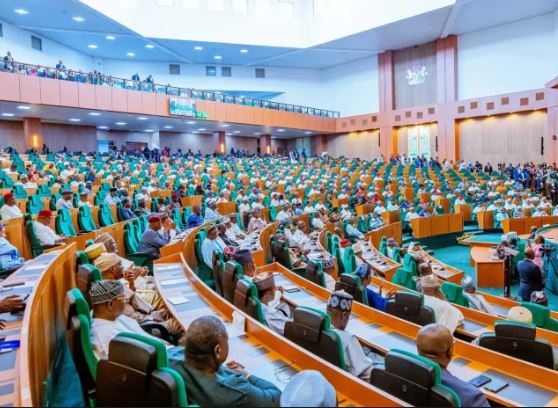
The development was confirmed by the National Assembly on Tuesday, November 3, 2026, through a statement released by the Clerk to the National Assembly, Kamoru Ogunlana. He stated that the Nigeria State Police Bill 2026 has now secured more than the constitutionally required two-thirds approval.
The Clerk said the Office of the Clerk has received and verified reports from 28 State Houses of Assembly indicating their approval of the Constitution of the Federal Republic of Nigeria, 1999 (Sixth Alteration) Bill, which seeks to provide for the establishment of State Police Services and related matters.
According to the statement, the Nigeria State Police Bill 2026 has exceeded the threshold of 24 states, representing two-thirds of the 36 State Houses of Assembly, as required under Section 9 of the 1999 Constitution for a constitutional alteration to be effected.
His words: ‘Following the receipt and verification of the reports, the Office confirms that 28 State Houses of Assembly have approved the Bill. This represents more than the constitutionally prescribed threshold of not less than two-thirds of the 36 State Houses of Assembly, equivalent to 24 States.’
The Nigeria State Police Bill 2026 was passed by the Senate on June 24, 2026, and subsequently by the House of Representatives on July 23, 2026, before it was transmitted to the 36 State Houses of Assembly for concurrence.
Ogunlana recalled that the bill was transmitted to the state legislatures on September 16, 2026, for consideration and approval, with a request that they communicate their decisions within 30 days. The stipulated period elapsed on October 15, but he said his office would continue to receive reports until the bill was transmitted for presidential assent.
‘In view of the approvals secured from the required number of State Houses of Assembly, the necessary administrative processes are being undertaken to facilitate the transmission of the Bill to His Excellency, the President of the Federal Republic of Nigeria, for assent, in accordance with the Acts Authentication Act, CAP A2, LFN 2004,’ he added.
The Nigeria State Police Bill 2026 seeks to amend the 1999 Constitution to provide for the establishment of State Police Services amid renewed calls for decentralised policing to address Nigeria’s security challenges, including banditry, kidnapping, terrorism and communal clashes.
For our readers resident in the United States, the development is significant, as the United States has long supported security sector reform in Nigeria, and a decentralised police system is seen by analysts as a potential game-changer for local intelligence, faster response, and accountability ahead of the January 2027 general election.
However, the Clerk clarified that Section 9 does not expressly prescribe a Third Reading for a Constitution Alteration Bill, unlike ordinary Bills. He also said the establishment of functioning state police services is not automatic, as remaining constitutional, administrative and implementation processes must still be completed.
According to news reports from Vanguard, Wednesday, no fewer than 30 state assemblies may have now approved the bill, as more reports continue to arrive at the National Assembly. The National Assembly is expected to transmit the Nigeria State Police Bill 2026 to President Bola Tinubu between now and next week.
Supporters argue that state police will allow governors to respond to local security threats without waiting for Abuja, while critics warn against possible abuse by governors, funding challenges, and the need for strong oversight.
The Presidency is yet to announce a date for assent, but the Nigeria State Police Bill 2026 is now the closest Nigeria has come in over two decades to breaking the federal monopoly on policing.