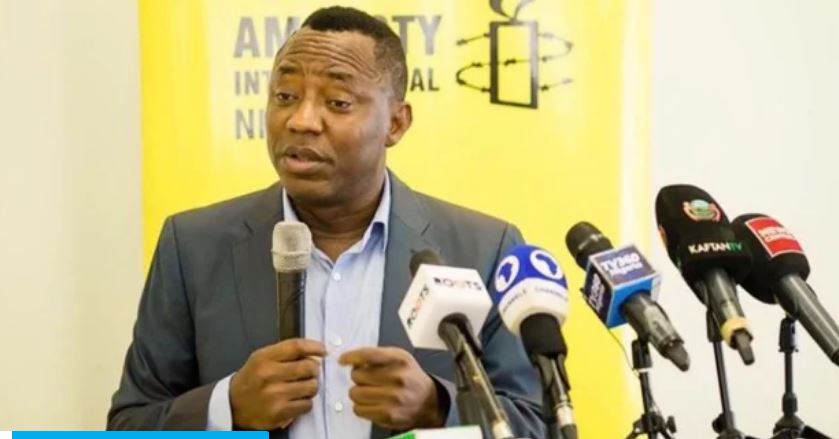
Presidential candidates Peter Obi and Omoyele Sowore have disagreed with former Vice-President Atiku Abubakar over his proposal to restore petrol subsidy if elected president in 2027.
Obi, the presidential candidate of the Nigeria Democratic Congress (NDC), said subsidy removal remained necessary, arguing that the failure of successive governments to properly manage and invest the proceeds should not be used as a reason to reverse the policy.
The former Anambra State governor spoke yesterday at the Nigerian Bar Association (NBA) conference in Port Harcourt, Rivers State, while reacting to the debate over Atiku’s proposal.
“I subscribe and I maintain that we need to remove subsidy. Mismanagement of the proceeds should not be the reason for not removing it,” Obi said.
He said the government should have introduced measures to cushion the impact of subsidy removal on Nigerians while investing the savings in productive sectors of the economy.
According to him, the resources recovered from subsidy removal had not been adequately managed, alleging that they were also being “mismanaged and stolen.”
Obi said he had anticipated the need for a structured approach to subsidy removal and outlined his position in his manifesto ahead of the 2023 presidential election.
“I will do it in an organised manner and whatever we recover would be invested appropriately,” he said.
Sowore, the presidential candidate of the African Action Congress (AAC), also opposed a return to the former subsidy regime, but argued that its removal had largely benefited state governors and the elite rather than ordinary Nigerians.
Speaking at the NBA conference, he questioned who had benefited from successive attempts to remove petrol subsidy.
“If there is anybody that has been consistent in the removal of fuel subsidy, it has been me. The question about fuel subsidy is: who are you subsidising? You are subsidising the elite. You are subsidising the governors. The only people who are doing well since the removal of fuel subsidy are the governors of states,” Sowore said.
He said successive governments had repeatedly announced the removal of petrol subsidy without resolving the underlying issues surrounding the policy.
Sowore argued that petrol remained the major subsidised product with a direct impact on ordinary Nigerians, adding that the debate should be linked to transportation policy.
He added: “I was a student in 1988. In 1999, they removed subsidy. We are in 2026; they are still removing subsidy. They are robbing Peter Obi to pay Bola Tinubu. That is what the removal of subsidy is all about. The poor people of this country only benefit from subsidy on petrol, gasoline. There is no subsidy on kerosene. What did they build with it? When it comes to subsidy, transportation policy is important,” he said.
HURIWA backs temporary petrol subsidy, demands audit of savings
THE Human Rights Writers Association of Nigeria (HURIWA) backed the restoration of a transparently administered petrol subsidy as a temporary measure to cushion the impact of rising fuel prices and the worsening cost of living.
The group, however, demanded the full disclosure and independent audit of the trillions of naira the Federal Government says it saved following the removal of the subsidy in 2023.
In a statement signed yesterday by its National Coordinator, Emmanuel Onwubiko, HURIWA said petrol subsidy was not inherently harmful, arguing that the major problem with the former regime was the corruption and abuse that allegedly characterised its administration.
The group said the scheme had been hijacked by profiteers and politically connected interests, turning it into an avenue for large-scale fraud.
HURIWA said the removal of subsidy should not amount to transferring the burden of economic mismanagement to Nigerians already grappling with high transportation costs, food prices, unemployment and declining purchasing power.
It said it supported economic reforms but maintained that such reforms must produce tangible improvements in citizens’ welfare and be accompanied by transparency and accountability.
The position followed the recent declaration by former Vice-President and African Democratic Congress (ADC) presidential candidate, Atiku Abubakar, that he would restore petrol subsidy if elected president in 2027.
Atiku had also questioned the management of funds saved since the subsidy was removed, arguing that the resources should have been channelled into poverty reduction, education, security and opportunities for young Nigerians.
HURIWA described the question as legitimate, particularly against the backdrop of conflicting figures surrounding the savings.
The Federal Government has said subsidy removal generated N15.8 trillion in resources for the Federation between June 2023 and December 2025. HURIWA noted that the Allied Peoples’ Movement (APM) had petitioned the Economic and Financial Crimes Commission (EFCC) and the National Assembly over an alleged N12 trillion discrepancy in the figures.
The rights group said the allegation should be investigated rather than dismissed as political rhetoric, insisting that Nigerians deserved verifiable information on the funds generated and how they were utilised.
“HURIWA demands that the federal government tell Nigerians, with verifiable documents, exactly how much it saved from subsidy removal, how much it distributed among the three tiers of government, and how the funds were ultimately spent,” the statement said.
The organisation called for a comprehensive and independently verifiable audit of all revenues and savings attributed to subsidy removal from May 2023 to date.
It also asked the government to publish details of the beneficiaries of the funds and identify the projects and programmes financed with the resources.
According to HURIWA, increased government revenue would mean little to ordinary Nigerians if it failed to translate into affordable transportation, improved education and healthcare, employment opportunities, better security and stronger purchasing power.
It said the impact of petrol pricing extended beyond motorists, affecting transportation, food distribution, agriculture, manufacturing and small businesses.
HURIWA also questioned why Nigeria, despite being a major crude oil producer, continued to expose citizens to high petrol prices while struggling with inadequate refining capacity.
The group said the solution to the corruption associated with the former subsidy regime should be stronger controls rather than imposing the full burden of higher fuel prices on Nigerians.
It called for transparent pricing mechanisms, strict verification procedures, technology-driven monitoring, independent auditing and the prosecution of individuals found to have defrauded the public.
HURIWA also rejected the argument that subsidy removal had automatically eliminated corruption, saying the controversy over the management of the savings reinforced the need for stronger oversight.
It urged the EFCC and the National Assembly to independently investigate the conflicting figures surrounding subsidy savings and make their findings public.
The rights group further demanded that the Federal Government open relevant financial records to Nigerians and provide a detailed account of how resources generated from subsidy removal had been managed.
HURIWA said Nigerians had already endured significant hardship in the name of economic reform and should not be left without clear evidence of the benefits of their sacrifices.
It argued that Nigeria could develop a subsidy framework that protects vulnerable citizens while preventing the corruption associated with the previous system.
“The choice should not be between subsidy and corruption. Nigeria can have affordable fuel, transparent subsidy administration, and strict accountability at the same time,” it said.
HURIWA maintained that Nigerians could no longer be expected to bear the consequences of subsidy removal while trillions of naira allegedly generated from the policy remained the subject of conflicting accounts.
It therefore called for urgent disclosure, an independent audit and full accountability, insisting that the Federal Government owed Nigerians a clear explanation of how the resources had been managed.
Restoring petrol subsidy will reverse Nigeria’s economic gains, says Idris
THE Minister of Information and National Orientation, Mohammed Idris, warned that restoring petrol subsidy would worsen Nigeria’s fiscal position, weaken investor confidence and reverse economic gains recorded since the removal of the subsidy by the President Bola Ahmed Tinubu administration.
Idris gave the warning in an Op-Ed published yesterday, titled “Restoring Fuel Subsidy Will Reverse Nigeria’s Economic Gains”, amid renewed calls for the return of some form of petrol subsidy.
The minister argued that reverting to the old subsidy regime would recreate the fiscal pressures, market distortions, fuel scarcity and arbitrage that made the policy unsustainable.
He said the debate should go beyond the immediate relief a subsidy might provide to motorists and consider the public expenditure that would have to be redirected from other sectors.
Idris recalled that Nigeria spent about $10 billion on fuel subsidies in 2022, when the country was grappling with declining oil production and weak revenues.
According to him, the World Bank had also warned that the subsidy was absorbing resources that could have been channelled into education, healthcare, infrastructure and social protection.
The minister said subsidy removal had instead created additional fiscal space for the three tiers of government, citing the Federal Government’s Nigeria’s Reform Scorecard: The Benefits, Costs and Harms Prevented.
He said the Minister of Finance and Coordinating Minister of the Economy, Taiwo Oyedele, had disclosed that subsidy savings mobilised N15.8 trillion for the Federation between June 2023 and December 2025.
Of the amount, about N5.43 trillion accrued to the Federal Government, while states received N6.52 trillion and local governments N3.88 trillion.
Idris, however, stressed that the N15.8 trillion should not be interpreted as money sitting in a separate government acc
ount.
Rather, he said, it represented resources released within the federation’s broader fiscal system and made available across the three tiers of government.
He said the additional resources had strengthened the ability of states and local governments to meet salary and pension obligations and invest in essential services, including primary healthcare, basic education and roads.
At the federal level, Idris said the improved fiscal space had supported investments in infrastructure, agriculture, security and human capital development.
He cited the Reform Scorecard as recording about N6.47 trillion in additional expenditure on strategic infrastructure, including major transport, housing, agricultural and security projects.
Among the projects highlighted were the Lagos-Calabar Coastal Highway, Sokoto-Badagry Superhighway and Trans-Sahara Superhighway.
Idris warned that reversing the subsidy policy at a time when Nigeria was seeking to consolidate investment in domestic refining could create uncertainty for investors and undermine efforts to strengthen energy security.
“Nigeria cannot build tomorrow’s economy by returning to yesterday’s unsustainable subsidy regime. We have moved beyond that model,” Idris said.
Okai challenges Tinubu on subsidy savings, demands transparency
PUBLIC Affairs Analyst and human rights advocate, Austin Usman Okai, has described former Vice President Atiku Abubakar’s call for a possible restoration of fuel subsidy as a major political and economic challenge to the Tinubu administration.
Okai said the debate had also exposed unresolved questions about the management of the savings reportedly generated from the removal of the subsidy.
He said the controversy was fundamentally about accountability, transparency and the economic welfare of Nigerians grappling with rising fuel prices and the high cost of living.
“Atiku has dealt a significant political blow to the Tinubu administration by reopening the conversation on fuel subsidy. The question Nigerians are asking is simple: if subsidy was removed and the government has consistently spoken about the enormous savings generated, where exactly have those savings gone?” he questioned.
Okai said the reactions from the Presidency, ministers and other government officials showed that Atiku’s intervention had touched a sensitive political issue.
He urged the Federal Government to provide a comprehensive account of the financial benefits of subsidy removal, including the amount saved, how the funds had been deployed, the projects financed with the savings and the benefits derived by ordinary Nigerians.
According to him, the government cannot continue to ask Nigerians to bear the burden of higher fuel prices without providing evidence that the sacrifices are producing tangible improvements in their lives.
“The Nigerian people are not asking for propaganda. They are asking for accountability. They want to know what happened to the money saved from subsidy removal and why, despite the promised benefits, millions of Nigerians are still struggling with unprecedented economic hardship,” he said.
Okai said the question of whether the subsidy should be restored, redesigned or permanently removed should be determined by sound economic reasoning, transparency and consideration for the welfare of Nigerians.
“Nigerians deserve a policy that reduces hardship, protects vulnerable citizens and strengthens the economy,” he added.
He challenged the Tinubu administration to publish a transparent account of the savings from subsidy removal and their utilisation, arguing that accountability should precede further demands for sacrifice from Nigerians.
Okai also urged Nigerians to pay close attention to the emerging debate, describing it as an important test of the government’s commitment to transparency, economic responsibility and the welfare of the people.
Atiku’s fuel affordability plan not return to old subsidy regime, says Okonkwo
SPOKESPERSON for the 2027 presidential campaign of former Vice-President Atiku Abubakar, Kenneth Okonkwo, has dismissed criticism of Atiku’s proposal to restore petrol subsidy if elected, saying the plan is aimed at making fuel more affordable to Nigerians.
Okonkwo, who spoke on Channels Television’s Sunday Politics, said President Bola Ahmed Tinubu misunderstood the proposal, insisting that Atiku was not seeking a return to the subsidy regime of the past.
He said the former vice-president’s proposal, which he described as the Atiku Fuel Affordability Plan (AFAP), was based on increased domestic refining and government intervention to make crude oil available to local refineries at affordable prices.
Okonkwo added: “It is ignorance of Tinubu to say that Atiku wants to go back to the subsidy of the old.”
According to him, the plan envisages supplying crude oil to domestic refineries at a fair price, thereby reducing production costs and making petrol more affordable to consumers.
“He said, ‘I will supply the needed crude to our local refineries at a price that will be fair enough for them to use to produce the fuel at a reduced and affordable price to Nigerians,’” Okonkwo said.
The campaign spokesman argued that Nigeria would not have needed a petrol subsidy if successive governments had developed adequate domestic refining capacity and ensured sufficient fuel supply.
He said the former subsidy regime became associated with corruption because Nigeria depended heavily on imported petrol.
“This was the way the subsidy of the old operated. They were importing 100 per cent of the fuel. We didn’t have any refinery,” he said.
Okonkwo alleged that the system created opportunities for the manipulation of import volumes and prices, with Nigerians ultimately bearing the cost.
He, however, insisted that Atiku’s proposal was fundamentally different from the former system.
“Atiku is not going back to that and cannot even go back to that,” he said.