Uche Amunike
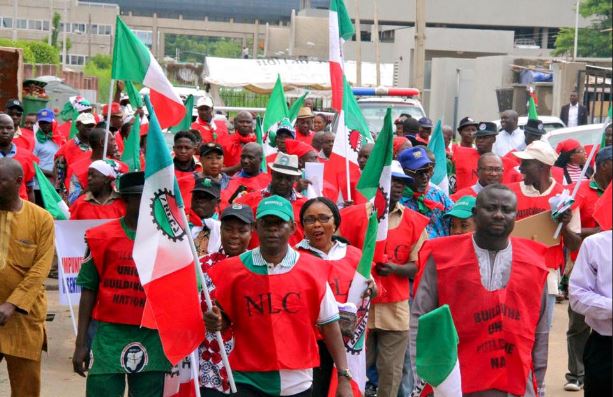
The NLC has described the current ₦70,000 national minimum wage as a ‘poverty wage,’ insisting that rising inflation and the increasing cost of living have rendered the salary inadequate for Nigerian workers.
The declaration signals the beginning of what the Nigeria Labour Congress says will be a major campaign for a new wage structure that guarantees workers a decent standard of living rather than simply meeting the minimum legal requirement.
Speaking at the opening of the Workers’ Solidarity Centre in Uyo, Akwa Ibom State, NLC President Joe Ajaero said organised labour is preparing for fresh negotiations on the national minimum wage and will not approach the discussions from a position of weakness.
The annual capacity-building programme brought together labour leaders, government officials and civil society organisations under the theme, ‘The Working Class and the Politics of 2027: Issues, Challenges and Opportunities.’
Addressing participants, Ajaero stressed the need to move away from the existing minimum wage framework towards what he described as a dignity-centred living wage capable of meeting the basic needs of Nigerian families.
According to him, the battle for a living wage will soon begin in earnest as organised labour prepares for another round of wage negotiations.
‘The amount that currently passes for a minimum wage can no longer sustain workers. It has become a poverty wage,’ he said.
The NLC president urged workers across the country to remain united throughout the negotiation process, insisting that labour unions must demand a wage that allows workers to provide food, shelter, education and healthcare for their families without unnecessary hardship.
He called on all affiliate unions and state councils to prepare for what he described as a crucial struggle to improve workers’ welfare, adding that labour would negotiate from a position of strength rather than desperation.
Beyond wages, Ajaero also expressed concern over Nigeria’s continued appearance among countries accused of violating workers’ rights. He alleged that trade union activities, collective bargaining and the constitutional right to strike continue to face significant challenges.
He therefore appealed to the Federal Government to immediately forward the tripartite-reviewed Labour Bills to the National Assembly for consideration.
According to him, the proposed labour reforms have remained pending for six years despite extensive consultations and agreements among stakeholders.
Ajaero argued that the prolonged delay has allowed outdated labour laws to remain in place, leaving workers vulnerable to exploitation and weakening the protection of their rights.
He maintained that modern labour legislation is essential if Nigeria hopes to align its labour practices with internationally accepted standards and provide stronger legal protection for employees.
Speaking on the nation’s economic situation, the NLC president rejected claims that Nigeria lacks the financial capacity to improve workers’ welfare.
Instead, he blamed poor governance, wasteful public spending and illicit financial flows for the country’s economic difficulties.
According to him, Nigeria possesses sufficient resources to fund quality healthcare, transportation, education and other essential public services if public funds are properly managed and allocated.
Looking ahead to the 2027 general elections, Ajaero urged organised labour to focus on building a sustainable political movement that prioritizes workers’ welfare instead of limiting its engagement to election periods.
Also speaking at the event, former NLC President Ayuba Wabba emphasised the importance of continuous political education and stronger union structures. He advised labour leaders to learn from previous political experiences and remain organised in advancing policies that protect Nigerian workers and promote social justice.