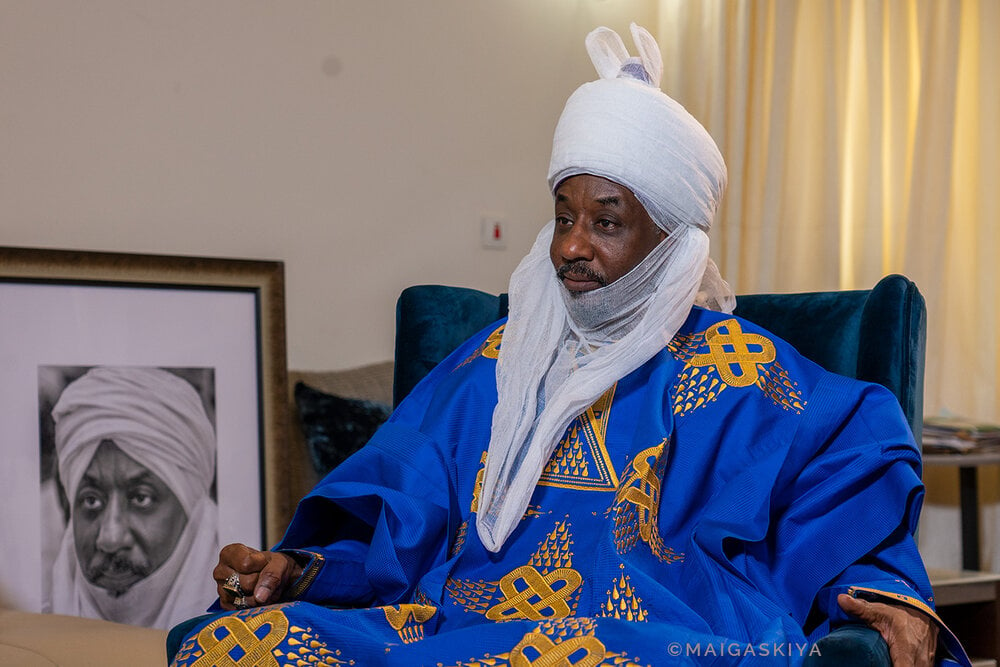
The Emir of Kano, Muhammadu Sanusi II, has questioned the Federal Government’s continued reliance on borrowing despite the removal of petrol subsidy, raising concerns over Nigeria’s fiscal direction under President Bola Ahmed Tinubu.
Speaking in an interview published by News Central TV, the former Governor of the Central Bank of Nigeria said while key economic reforms were necessary, their implementation and sequencing risk undermining expected gains.
Sanusi reiterated his long-standing position that the subsidy regime was unsustainable, criticising Nigeria’s past dependence on imported petroleum products despite being an oil-producing nation.
“I have always said the subsidy regime was unsustainable. We cannot continue supporting foreign refineries while neglecting our own,” he said.
He, however, acknowledged improvements in the downstream sector, noting that Nigeria has begun shifting towards domestic refining and export of petroleum products.
“Today, we have our own domestic refinery. We’re not importing petroleum products. We’re even exporting to Europe, and this is very good for the economy,” he added.
Despite backing subsidy removal and exchange rate liberalisation, Sanusi raised concerns over the timing of the reforms, arguing that they were introduced in a weak monetary environment.
“Artificial exchange rates, especially when you’re printing money, cannot work. There was always going to be a devaluation,” he said.
He explained that liberalising the exchange rate without first tightening money supply contributed to the sharp depreciation of the naira.
“If you remove subsidy and liberalise exchange rates in an environment of loose monetary conditions, the naira drops significantly. That was a timing issue,” he noted.
Sanusi further warned that the expected fiscal relief from subsidy removal has yet to translate into reduced borrowing, questioning the government’s fiscal discipline.
“We’ve removed the subsidy. If you’re not paying for it and you have more revenue, why are we still borrowing? What exactly are we borrowing for?” he asked.
He stressed the need for visible fiscal consolidation, insisting that eliminating wasteful spending should naturally reduce the need for debt accumulation.
The monarch’s remarks add to ongoing debates among economists and policy analysts over the impact of recent reforms and whether they are delivering tangible benefits to Nigerians.