
By Uche Amunike
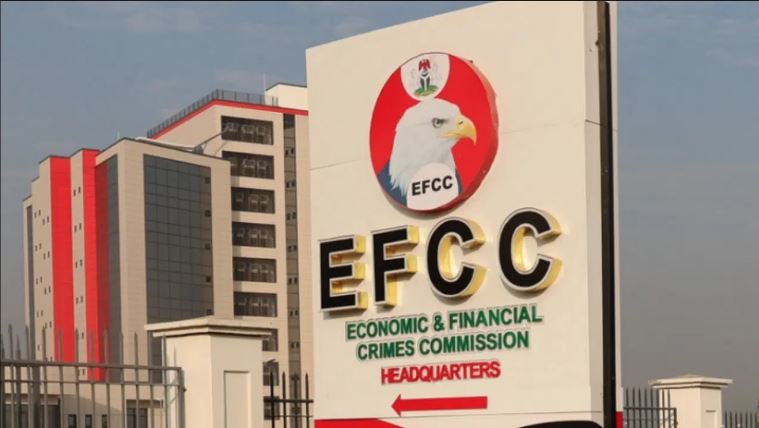
Chairman of the Economic and Financial Crimes Commission (EFCC), Ola Olukoyede, has disclosed that the commission recovered and forfeited cash and assets worth more than $500 million to the Federal Government over the past three years. The EFCC forfeiture half billion dollars achievement, according to him, reflects the agency’s intensified efforts to take the proceeds of economic and financial crimes away from suspects.
He has however, stated that the commission is not satisfied with its current recovery record. He disclosed that the EFCC is considering an appeal against a Federal High Court decision that dismissed its application for the final forfeiture of nine properties linked to former Attorney-General of the Federation and Minister of Justice, Abubakar Malami.
He has also announced plans to reward whistleblowers whose credible information lead to the recovery of stolen Nigerian assets. Such informants, he said, could receive between 2.5 per cent and five per cent of the recovered assets.
Olukoyede made the disclosures while delivering a lecture on Economic Crime at the Cambridge International Symposium on Economic Crime in the United Kingdom.
He said the commission had, since his assumption of office, made significant progress in tracing and recovering assets suspected to be proceeds of crime.
Hear him: ‘Within three years of my assumption of office, we’ve been able to forfeit both cash and assets worth over half a billion dollars to the government’.
The EFCC forfeiture half billion dollars record, he explained, was achieved under Nigeria’s legal framework, which allows the commission to pursue the forfeiture of assets suspected to have been acquired through criminal activities without necessarily waiting for a criminal conviction.
According to him, similar legal provisions exist in countries including Australia and Canada, where authorities can take steps to recover suspected proceeds of crime through civil forfeiture processes.
Olukoyede also referred to an aircraft recently forfeited to the Federal Government by a member of the monetary committee of a power project. He said the EFCC discovered that the official allegedly received a bribe of about $30 million.
According to the EFCC chairman, the aircraft was forfeited about three months ago and has since been added to the presidential air fleet.
Speaking on the case involving Malami, Olukoyede said the commission opened investigations based on reasonable suspicion of criminal abuse of office and traced 57 properties to the former AGF.
He stated that final forfeiture orders had already been secured over 48 of the properties, while nine others located in Kebbi and Kaduna states remain subject to legal action.
‘We’ve been able to forfeit about 48. Even the nine that were left for him, I’m considering filing an appeal, so that we can take everything away from him,’ Olukoyede said.
The development followed a Federal High Court ruling that ordered the final forfeiture of 48 properties linked to Malami after they had earlier been placed under an interim forfeiture order.
The EFCC forfeiture half billion dollars recovery drive also featured prominently at the 43rd Cambridge International Symposium, themed, ‘Asset Recovery and the Rule of Law – Taking the Profit Out of Crime.
The symposium brought together judges, prosecutors, law enforcement officers and experts from different countries to examine effective ways of recovering proceeds of crime while protecting the rule of law.
Olukoyede further urged Nigerians and individuals living abroad with information about assets allegedly stolen or moved outside the country to cooperate with the EFCC.
He assured potential whistleblowers that the commission would offer incentives, explaining that anyone whose credible intelligence leads to successful recovery could receive between 2.5 per cent and five per cent of the recovered assets.
According to him, stronger whistleblower protection and incentives are essential to encouraging citizens to assist law enforcement agencies in tracing Nigeria’s stolen wealth and ensuring that the proceeds of crime are returned to the government.