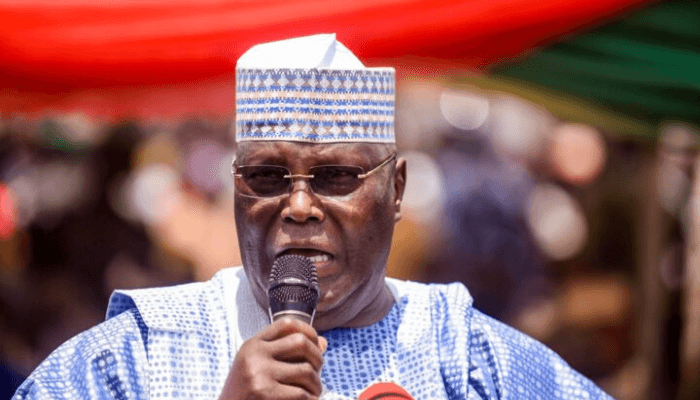
Atiku Abubakar, former vice president, has declared he is willing to step aside for Peter Obi or any other candidate that emerges from a proposed opposition coalition ahead of the 2027 presidential election, signaling a potential shift toward unity among Nigeria’s fragmented opposition.
Speaking in an interview on Arise News on Wednesday, Atiku said his priority is the success of a broad-based coalition rather than personal ambition, even as he confirmed that the 2027 race would likely be his final bid for the presidency.
“I will step aside for any winner… including Peter Obi,” he said, stressing that the coalition’s first option would be to produce a consensus candidate, failing which a primary election would determine the flagbearer.
Atiku, 79, described the next election cycle as his “last outing,” raising the stakes for what would be his seventh attempt at Nigeria’s top job. He argued that his experience remains relevant despite criticism that he represents an older political order.
“I represent both the past and the future,” he said, contending that younger leaders require mentorship and guidance from more experienced politicians to succeed.
The former vice president also revealed he was a leading force behind the emerging coalition under the African Democratic Congress (ADC), insisting that opposition parties cannot win elections in isolation.
“I don’t see a future… unless there is a coalition,” he said, citing declining electoral strength within his former party, the Peoples Democratic Party (PDP).
Atiku framed the coalition as both a strategic alliance and a response to dissatisfaction with the administration of President Bola Ahmed Tinubu, which he described as “a disappointment… whether economically or otherwise.”
Beyond electoral strategy, he warned about what he called the weakening of democratic institutions, alleging an over-concentration of power in the presidency.
On the contentious issue of zoning, Atiku dismissed claims that the presidency must rotate to the South in 2027, arguing instead for a constitutionally entrenched rotational system. He acknowledged opposing such a provision in the past but admitted in hindsight that it was a mistake.
“I should have supported… rotational presidency,” he said, adding that he would pursue it as a constitutional amendment if elected.
Atiku also expressed confidence in retaining strong support in northern Nigeria, which he described as his primary political base, despite concerns about growing fragmentation in the region.