
By Charles Anyiam (c).
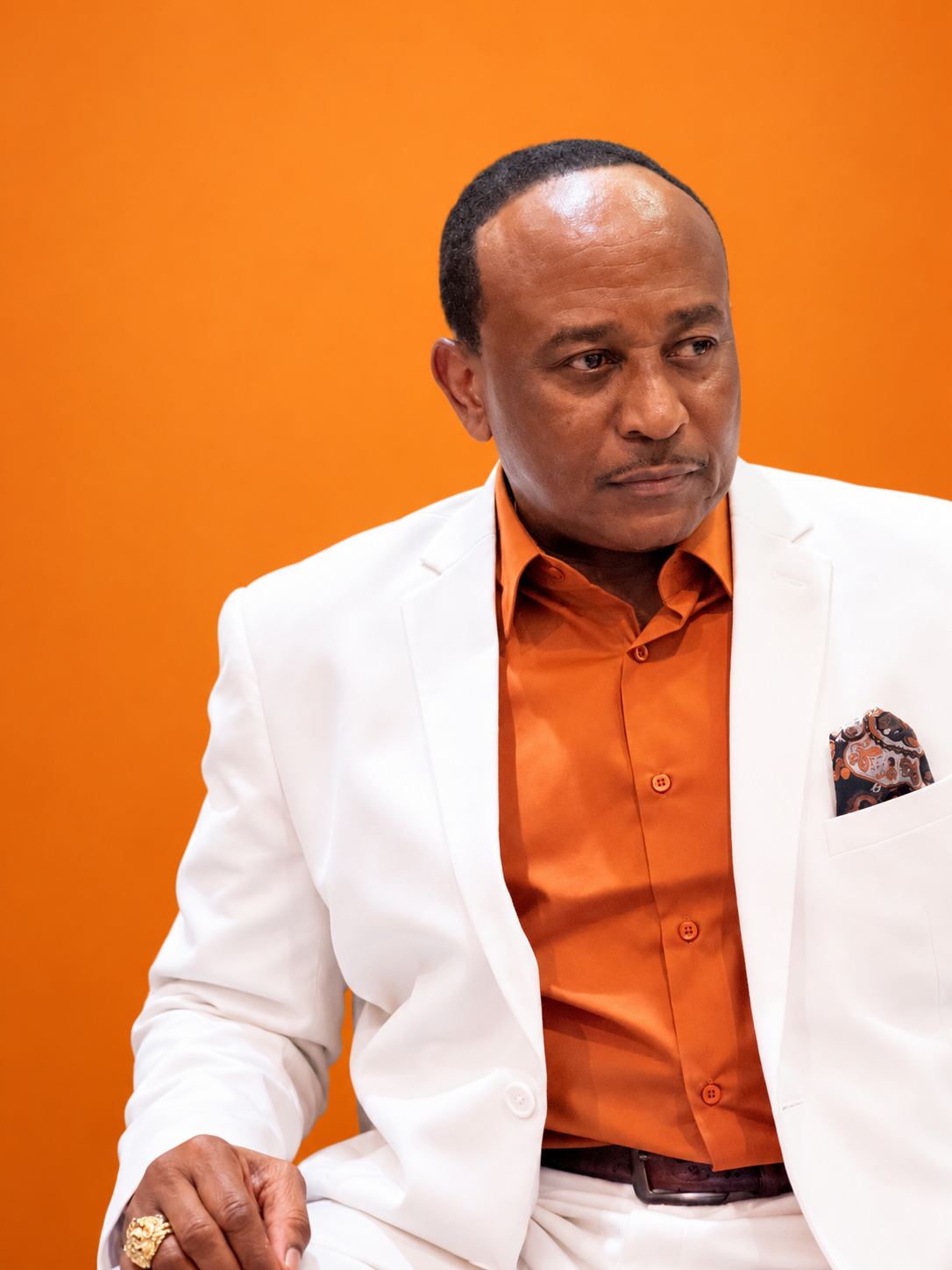
At 80, Mathias Asongwe Lawrence (MAL) Fobi is a foremost American bariatric surgeon.
But, he is of African origin.
By definition, bariatric surgery is a highly skillful specialty – a series of medical procedures that involve the alteration of the human digestive system to help people with severe obesity condition lose weight, and improve their overall health conditions.
Ordinarily, this line of work would have been an exclusive preserve for White doctors in Jim Crow’s America.
Not for a medical iconoclast such as Dr. Fobi.
He broke the barrier.
With an official record that shows America as a leading country in the global index of severely and morbidly obese population, Dr. Fobi had his work cut out for him, from the start.
According to data from the Center for Disease Control and Prevention (CDC), the current obesity rate in the United States of America is approximately 40.3 percent, with about 9.4 percent of Americans living with severe obesity.
Among his diverse clientele, were highly recognizable figures such as Hollywood celebrities like Roseanne Barr, Jennifer Holliday, Randy Jackson, and the late gospel music singer and songwriter, Andrae Crouch.
This quickly earned him the international recognition as the “surgeon to the stars”.
In context, Dr. Fobi is the quintessential exemplar of African Diaspora power.
After semi-retiring from active practice, and relocating to suburban Atlanta, Georgia, from Los Angeles, California, where he lived and worked for the better part of his career, his skills are now in demand in various parts of the world.
Given that obesity has become a global epidemic, according to World Health Organization (WHO) – some journals have even referred to it as a pandemic – Dr. Fobi has “maintained professional connections with India”, where he serves as a Director at Mohak Bariatrics in the Indian city of Indore, where he had also served as Director of Clinical Affairs and Research at the Mohak Bariatrics and Robotics.
For a Blackman in America, he made an audacious career move of developing a signature surgical innovation which became internationally renowned as the “Fobi Pouch”, a modification of gastric bypass surgery.
This landmark procedure, according to available information, “incorporates a silastic ring designed to help prevent stretching of the stomach pouch”.
Described as an important contribution to bariatric surgery, the goal was exclusively developed by Dr. Fobi with the goal of improving “long-term weight maintenance”.
On a personal level, our paths had crossed in the latter part of the 1980’s as members of the larger African Diaspora community in Los Angeles.
And we became instant friends.
In my uncountable interactions with him, his undying love for the continent of Africa and the Diaspora was copiously evident.
He openly supported political and humanitarian causes in his native Cameroon.
I cannot count how many times, he and his uniquely supportive wife, Helen, hosted African dignitaries in their spacious mansion up on the hills of the Los Angeles suburb of Palos Verdes, California.
Several years ago, the editorial board of The African Times/USA nominated and honored him alongside other distinguished personalities, for his tireless contributions to the welfare of the African emigré community in the United States.
An unapologetic Pan Africanist, the good doctor who arrived in the United States in the 60’s, hails from a truly humble background in his hometown of Nkwen, which is now part of the Bamenda III Council in northwestern Cameroon in Central Africa.
In a literally short period of time, he left his imprimatur on the highly competitive American medical profession with his signature surgical innovation – the “Fobi Pouch”, and was severally honored as a distinguished member of accomplished Africans living in the United States of America.
Away from the surgical theatre, Dr. Fobi’s best accomplishments were recorded in his Diaspora community, starting from his contributions to the uplifting of the quality of life among his fellow Cameroonians.
Last week, his clansmen and women staged an unprecedented best series of events I have ever had the privilege of attending, to honor the exceptional life of their kinsman, Dr. Fobi in his new hometown of Atlanta, Georgia.
The good doctor had turned 80.
Dressed in their colorful traditional Bafut Atoghu attire, they came from far and wide to celebrate him.
They were, of course, joined by so many non-Cameroonians, including yours truly.
“We celebrate”, “Dr. MAL Fobi for the lives he has touched, the barriers he has broken, and the legacy he continues to build.
“His influence is lasting, his presence is a blessing, and his example is one we proudly honor, today”, the event’s organizers stated in the the brochure, among so many other words that were written and spoken about the legacy of of a remarkable leader in the landscape of the African Diaspora in America.
“I am grateful for the outpouring of love and appreciation from my own people”, he told me in our many sideline chats.
Worthy of emulation, what is particularly impressive about the celebration of the unfolding legacy of Dr. MAL Fobi, is the organic nature of the three-day event.
There were testimonials of the lives he transformed, the literal functional community he managed to forge and foster in America where life can be slavishly brutal for new arrivals.
He has to his credit several professionals – medical professionals, lawyers, business people, etc., who owe their success to the selfless assistance of Dr. Fobi.
At the gala dinner to round off the special birthday event, I had the opportunity to share a table with two Cameroon-American doctors – Dr. Degaulle Cabinda, a pharmaceutical doctor and Dr. Martha Tasinga, a general physician who regaled me with stories about how Dr. Mathias Fobi impacted their lives, and the lives of so many others in their community.
I was profoundly flabbergasted, extremely impressed, and reduced everything I thought I knew about the man to mere trifles.
In the final analysis, I concluded that the recurring message from his army of mentees and beneficiaries of his largesse, was the need for the privileged to give back, not only to immediate family members, but for each immigrant African to develop a strong sense of community, and feeling of camaraderie, within the wider American ecosystem.
That may likely be one of the many trajectories to our collective emancipation as the distinctive African Diaspora community.
At the end, I was reminded of the need for more Dr. Mathias Fobi’s to evolve in our various communities, and for a new sense of Diaspora culture to emerge, especially in the context of the growing global sense of nationalism, now pervading the entire world.
-ANYIAM IS THE EDITOR-IN-CHIEF OF THE AFRICAN TIMES/USA, A NATIONAL US NEWS JOURNAL, BASED IN LOS ANGELES, CALIFORNIA, MEDIA ANALYST, AUTHOR, PUBLIC SPEAKER, AND DIPLOMAT.