
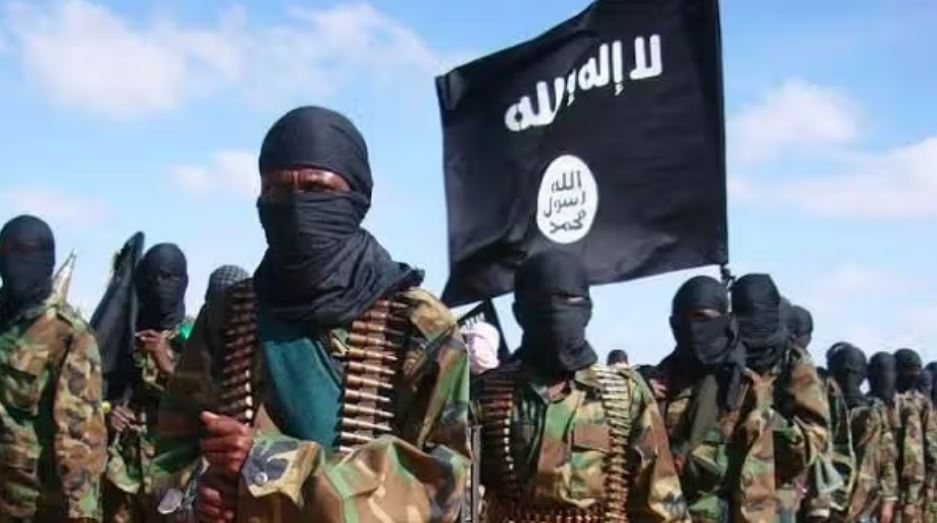
The new US terrorism financing sanctions list might look like just another routine headline to many Nigerians, especially those expecting well-known politically exposed persons to be named. But the real story is bigger. These sanctions reveal how the fight against terrorism is shifting from forests and battlefields into spreadsheets and financial networks.
More than a roll call of suspects, they underscore the rising power of financial intelligence, the necessity of international cooperation, and the daunting challenge of cutting off the money lifelines that sustain insurgent movements.
Beyond the Names on the List
The US Treasury’s Office of Foreign Assets Control (OFAC) designated Mukhtar Adamu Muhammad and three Bureau de Change companies for allegedly facilitating transactions linked to ISWAP. To some, this looked like America exposing Nigerian blind spots. In reality, Nigeria’s Sanctions Committee had already listed several of the same actors, and officials welcomed Washington’s move as complementary.
The story is not about Abuja’s failure but about how domestic investigations and international enforcement now function as interconnected parts of a global counterterrorism ecosystem. Identifying networks is only the first step; disrupting them requires cooperation across borders.
When Terror Money Goes Global
Contemporary terrorism is fundamentally transnational. While insurgent groups occupy specific locations, their funding networks span global financial channels. This reality poses a steep challenge for national regulators, as no single country possesses complete visibility over global money flows. Due to the U.S. dollar’s central role in international commerce and extensive global reporting mandates, American authorities often hold a broader structural view of cross-border transactions than individual nations can achieve alone.
This advantage reflects the architecture of the global financial system itself, rather than inherently superior intelligence. Ultimately, the latest sanctions underscore the fact that financial intelligence is increasingly internationalised. Effective modern counterterrorism depends less on what a single country knows and far more on cross-border information sharing and institutional coordination.
The Real Concern Is Institutional Blind Spots
Public debate on terrorism financing often fixates on dramatic questions: Who funds terrorists? Which powerful figures are involved? Why are prominent names missing from sanctions lists? Exposing high-profile actors may serve accountability and deterrence, but could also risk obscuring the real issue. The greatest vulnerabilities are institutional blind spots, not individuals. Terrorist networks thrive by exploiting gaps between regulators, banks, customs, and enforcement agencies.
Information from the NFIU may not reach customs or tax records; CBN reports may fail to connect with EFCC or border enforcement data. The challenge is not the absence of information but the difficulty of integrating and acting on it swiftly. Effective counterterrorism requires coordination systems as complex as the networks they confront.
What FATF and GIABA Have Been Warning About
The concerns raised by the latest sanctions are not new. When the Financial Action Task Force (FATF) placed Nigeria on its grey list in February 2023, it cited weaknesses in anti-money laundering and counterterrorism financing systems. The Inter-Governmental Action Group against Money Laundering in West Africa (GIABA) also raised similar concerns. These were reflections of structural vulnerabilities common in emerging economies.
Nigeria’s reliance on cash transactions, informal value transfer systems, and extensive cross-border trade sustains livelihoods but also creates openings for extremist networks. The issue is not that Nigeria’s financial system is uniquely compromised. However, the same openness and informality enabling commerce can also be exploited by those pursuing illegitimate objectives.
The Persistence of Financial Networks
One of the lessons emerging from global counterterrorism efforts is that financial networks often prove more resilient than military structures. In 2021, courts in the United Arab Emirates convicted Nigerian nationals accused of transferring approximately $782,000 to Boko Haram. Subsequent US sanctions targeted additional individuals involved in raising and moving funds linked to extremist groups.
Nigeria’s own sanctions processes have repeatedly identified individuals and businesses allegedly connected to terrorism financing. These cases suggest persistence rather than isolation. Financial facilitators adapt. When one channel is disrupted, alternative routes emerge. When one intermediary is removed, another may take their place.
This adaptability explains why sanctions should not be viewed as silver bullets. Rather than eliminating terrorist organisations overnight, their purpose is to increase operational costs, complicate financial transactions, reduce flexibility, and gradually constrict the resources available to extremist groups. In other words, sanctions are instruments of economic attrition.
Is Cooperation Working?
The latest developments offer evidence that international cooperation is producing results. The overlap between Nigerian and American sanctions suggests increasing alignment between domestic investigations and international enforcement mechanisms. Intelligence sharing, financial monitoring, and coordinated sanctions indicate that partnerships are becoming more operationally meaningful.
As critical as that is, cooperation remains a work in progress. Counterterrorism partnerships have traditionally focused on military operations and security intelligence. Increasingly, however, success depends on integrating financial regulators, customs authorities, tax agencies, law enforcement bodies, and intelligence services into a unified framework.
The future of counterterrorism may depend less on individual institutions than on the quality of connections between them. States do not merely need more information. They need better systems for combining and analysing the information they already possess.
What Nigeria Should Do Next
The policy implications require that Nigeria continue strengthening coordination between financial intelligence units, customs authorities, tax agencies, banking regulators, and law enforcement institutions. Effective information sharing remains one of the most powerful tools against terrorism financing.
Secondly, Nigeria should deepen financial intelligence cooperation across West Africa. Terrorist financing networks are regional in nature, and monitoring efforts must reflect that reality. Thirdly, reforms aimed at keeping Nigeria off the FATF grey list should be treated not merely as compliance exercises but as national security priorities. Stronger anti-money laundering systems benefit both economic governance and counterterrorism efforts.
Finally, financial investigations should receive the same strategic attention often devoted to military operations. Soldiers confront terrorists in the field. Institutions confront the money that sustains them. Both dimensions are essential.
The Invisible Battlefield
America’s latest ISIS financing list is a reminder that modern security challenges are increasingly shaped by financial systems, intelligence networks, regulatory frameworks, and institutional cooperation. The fight against insurgency no longer occurs solely in forests, deserts, and remote borderlands. It also unfolds in transaction records, compliance reports, intelligence databases, and cross-border financial flows.
The most important lesson from the latest sanctions is not that foreign governments are doing Nigeria’s work. Nor is it that terrorism financing has suddenly emerged as a new threat. The lesson is that in an interconnected world, security has become inseparable from financial governance. Military pressure remains indispensable. But lasting success increasingly depends on whether states can identify, track, and disrupt the financial networks that allow violent groups to endure.
In the twenty-first century, the battlefield against terrorism is no longer confined to where insurgents fight. It extends to where money moves. Only when Nigeria learns to see that financial battlefield most clearly will the nation be best positioned to secure the peace it seeks.


