
By Charles Anyiam (c).
From all of my writings about Africa and her Diaspora, over the years, I have never ever hidden my peculiar feelings about South Africa.
Simply put, I love South Africa. And I love her people.
And I believe they love me, too.
In case you do not know, I am Nigerian by birth, and American by naturalization.
But, the events of recent history have made me a bit despondent about Africa’s rainbow nation.
Xenophobia. The big elephant in the room.
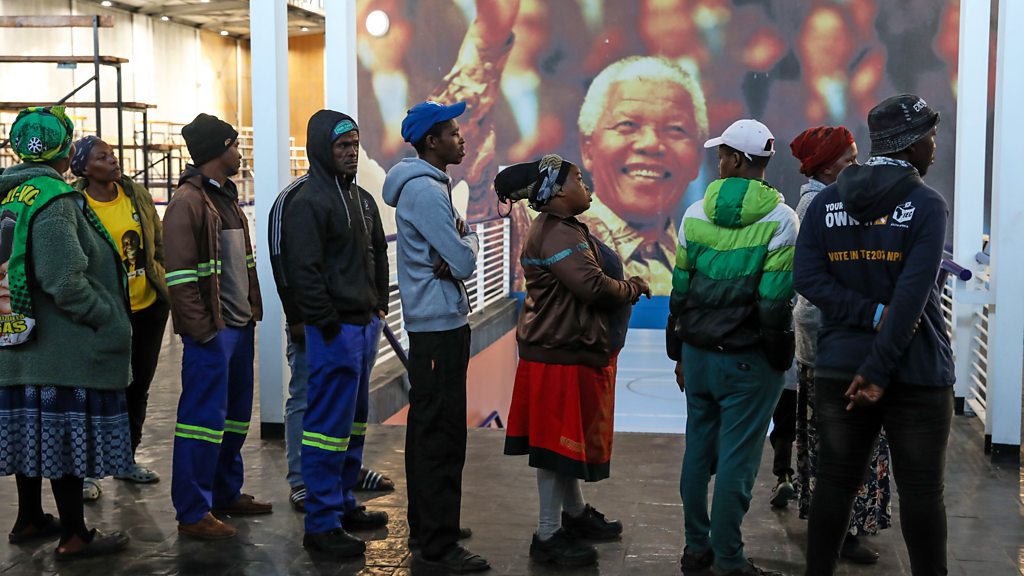
It is for this particular reason, and other related issues, that I am closely watching the upcoming November 4th local government elections in South Africa, and how they will impact the future trajectory of this important African country, and how it relates to the rest of us in the continent.
Dice it anyway you like, the new South Africa is a bona fide African investment.
And as such, every African, and for that matter, every Black person on the face of the earth, reserves the right to have a say-so in the affairs of South Africa.
Deny it or not, it is on record that the rest of the continent, and her Diaspora, invested selflessly – their blood, sweat, tears, and money – into the emergence of what is South Africa today.
I vividly remember the supreme sacrifices made by frontline states – Zambia, Tanzania, Botswana, Mozambique, Eswatini, etc., plus the huge financial investments, running into billions in today’s money, that were made by non-frontline states, and the Diaspora in snatching South Africa from the deathly claws of apartheid and its vices.
Like a former Nigerian president, Olusegun Obasanjo said matter of factly recently, Black South Africans would still not be free today, but for the bold efforts of the rest of Africa, especially Nigeria.
That is an incontrovertible fact, and the omnipresent truth.
And why the interest in the November elections in South Africa?
According to analysts, the outcome at the polls have the potential to redefine the balance of power between the two major parties in the current political arrangement, the Government of National Unity (GNU), – between the once dominant African National Congress (ANC) and the Democratic Alliance (DA).
If this happens, it will most likely rattle the presidency of President Cyril Ramaphosa, and the ANC, and will doubtlessly reshape the coalition ahead of the 2029 presidential election.
And, if the ANC drops to similar electoral levels as the DA in the November 4th polls, which I am told is quite likely, it will dramatically change the power dynamics in the GNU.
Another reliable analysis I just read said that “if the two parties receive similar levels of electoral support, it will essentially make the ANC, in political, state, and public perceptions, the equal of the DA.
“If the ANC fails bellow the DA, it will, as far as the public perception is concerned, make the DA the largest party in the national government based on 39.7% vote in the 2024 national and provincial elections.
“In a scenario where the DA levels with the ANC, or the ANC fails below the DA, the ANC might be the largest party in the GNU, but it will be seen by voters as a party that has lost a national election, rather than the local elections”.
By all available accounts, the ANC is going into the next month’s elections like a boxer on the ropes.
Truth be told, the ANC has underperformed.
I challenge anyone to prove me wrong, to the contrary.
To what degree has it underperformed will depend on who you ask.
In the area that gives me great concern is the issue of immigration, and the cankerworm that is xenophobia.
All attempts to absolve itself of the damage xenophobic and afrophobic outbursts have done to the reputation of South Africa, has been met with serious skepticisms.
The sin of xenophobia has only gone to compound the catalogue of administrative woes recorded under the party of the great Madiba.
Personally, and to many South Africans, with whom I have the good fortune of having as friends and family, we are unimpressed.
Starting from the controversial eight-year term of “Mkhulu” Jacob Zuma, and now, President Ramaphosa, it has been a long story of a downward spiral for a country that had so much hope and potential – one that the apartheid regime – bequeathed to a Black majority government.
Relatively speaking, I am always in South Africa.
And every time I visit, I see a country tottering at the seams.
The decaying state of the national gateway airport, the OR Thambo International Airport, is emblematic of the dysfunction of a country that is deservedly reputed as one of the most beautiful places on planet earth – from the scenic coastlines of the Cape Province to the topographical wonders of the Limpopo region.
Recently released data from the International Monetary Fund (IMF), at its yearly meeting held in Bangkok, Thailand seems to bolster our concerns about a country on a rapid economic decline.
The report showed that South Africa’s economic growth is much lower than that of subsaharan Africa.
Contained in the IMF Economic Outlook Update Sub-Saharan Africa report is that South Africa’s economic growth for 2026 is 1%, 78% lower than Sub-Saharan Africa’s 4.5%.
According to expert opinion, what makes this poor growth concerning, apart from it being the lowest in Africa, is that South Africa is a resource-rich country.
“Furthermore”, the analysis says, “other resource-intensive countries such as DRC, Zambia and Ghana, have achieved strong growth”.
Therefore, the only reasonable explanation for South Africa’s stunted economic growth is attributable to poor policies, rather than global pressures.
Mteto Nyati, a frontline business leader and chairman of South Africa’s premier energy company – Eskom – points to poor economic choices by the government as the main reason for the current downturn.
“We talk endlessly about creating an enabling environment for business and investment, both local and international. Yet the actions do not match the rhetoric”, he said.
“Red tape, inconsistent policy, and slow-decision making continue to choke investment across almost every sector of the economy”.
He reminded the authorities that capital, talent, and opportunities are mobile.
Nyati also called out the government for lack of self discipline, and the will to cut bureaucracy and prioritize execution.
To worsen the situation, the South African government has been unable to checkmate anti-immigrant groups with records of illegal and unconstitutional activities, such that has gnawed away at the equitable contributions of immigrants to the socioeconomic growth of the country.
While the overall national percentage of immigrant contributions to the GDP hovers around 3%, the reality on the ground is that immigrant entrepreneurs hold a much larger footprint in specific niches – particularly in the informal retail, spaza shop, and micro-enterprise sectors in urban and township areas where local ratios can be much higher.
On the issuance of visas to productive members of the immigrant population, that has been an unmitigated disaster.
The government agency responsible for this process has been known to be mired in corruption and incompetence, and grift.
For instance, a particular incident comes to mind – when the third richest person in the continent, Nigerian-born, Abdulsamad Rabiu was turned back at the airport – for a minor passport infraction that could have been resolved there and then!
This speaks of official indiscretion on the part of South African officials, who are notorious for incompetence.
Mr. Rabiu who is worth well over $19 billion USD, was actually on his way to attend a mining Indaba – (trade show) in Durban!
He had to fly back home in his private jet.
I also remember Nobel laureate, Wole Soyinka being routinely refused entry into South Africa on a number of occasions, one of them being to attend a conference on the invitation of the former First Lady, Gracia Mandela.
Who on earth (for that matter, in South Africa) does know Soyinka, with his trademark grayed Afro?
Dumb and ridiculous, all rolled into one!
Finally, I am hoping that South Africans of all colors, races and religion, do vote with their heads, and not their hearts, November 4th.
I want to state here that their collective future is what is on the ballot – not the parochial interests of the politicians, who come and go, willy nilly.
The electorate must reject the lazy and spurious argument that the immigrants are their primary problem.
No. The politicians are.
Enough of the scapegoating of migrants.
The immigrants (the legal ones, of course), add to the GDP, rather than subtract.
Let me conclude this article by saying that South Africa is better off as a country with a system of legal immigration that attracts investments and talents, local and international, than without such a dynamic.
In reality, Africa can do without South Africa, but South Africa cannot do without the rest of Africa.
Ponder on that, my South African brothers and sisters.
Maybe it is time, South Africans reevaluate the caliber and quality of those who aspire to run the affairs of their beloved country.
South Africans deserve better than what they have now, in terms of quality of leadership.
The problem is no longer White apartheid but leadership profligacy of the Black majority.
The choice is yours..
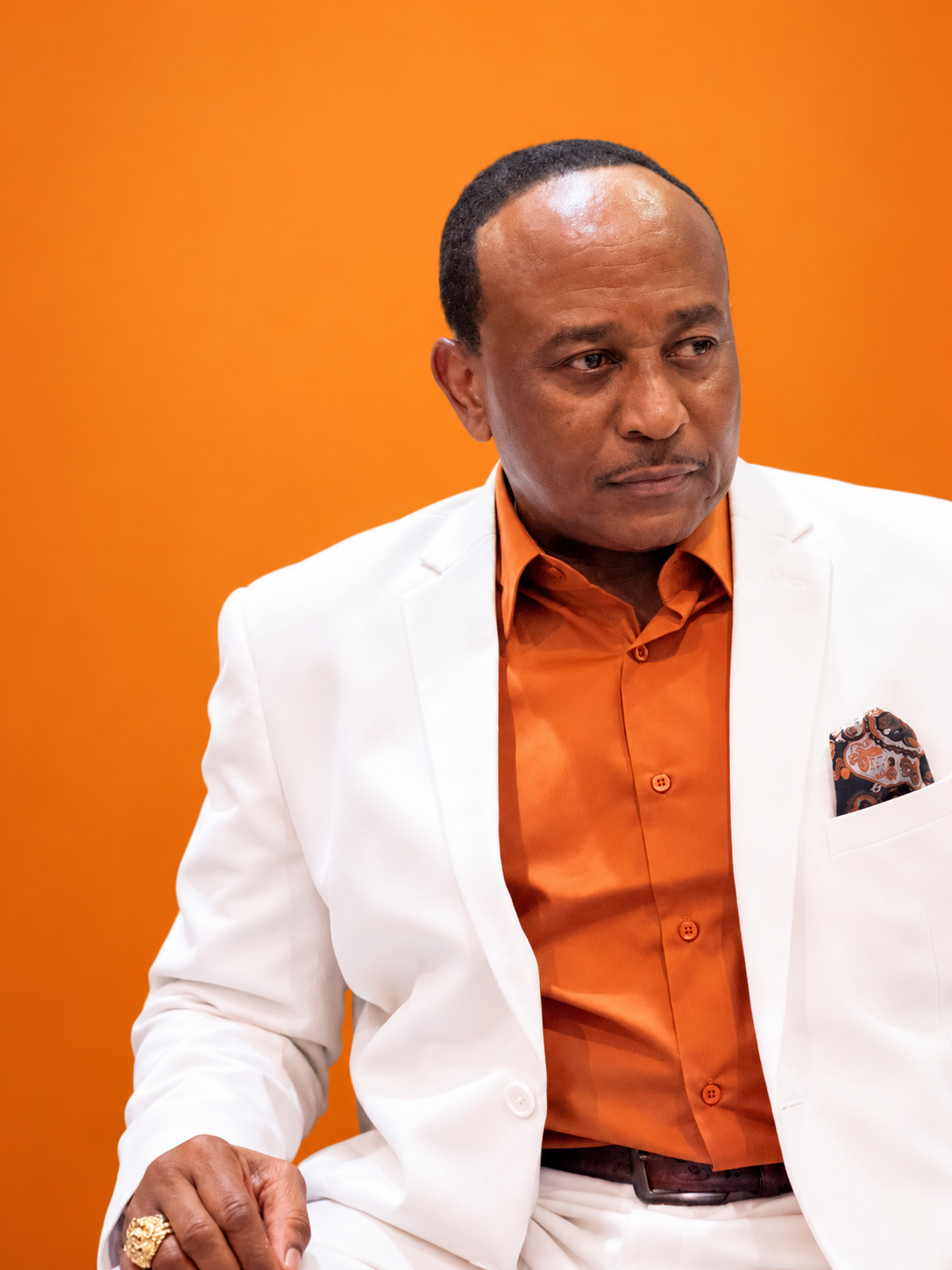
*ANYIAM IS THE EDITOR-IN-CHIEF OF THE AFRICAN TIMES/USA, A NATIONAL US NEWS JOURNAL, BASED IN LOS ANGELES, CALIFORNIA; A MEDIA ANALYST, AUTHOR (‘HOW TO WIN ALL THE TIME – POWER QUOTES TO LIVE BY’ ON AMAZON); PUBLIC SPEAKER, AND A DIPLOMAT.
QUICK SHARE:


