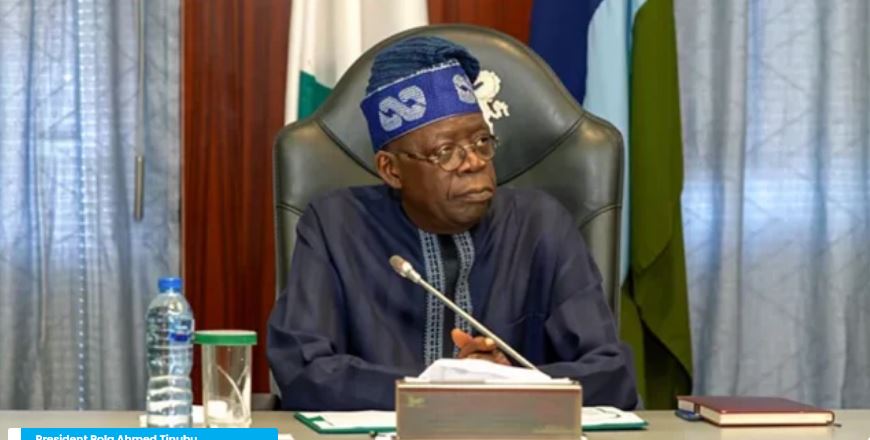
Presidential aides, Bayo Onanuga, Dada Olusegun, and House of Representatives member, Philip Agbese, have separately dismissed calls for President Bola Tinubu’s resignation, made respectively by the presidential candidate of the Nigerian Democratic Congress, Peter Obi, and the House Minority Leader, Fred Agbedi.
Obi had urged Tinubu to follow the example of Keir Starmer, who recently announced his resignation as UK Prime Minister.
Starmer’s decision followed mounting public frustration over a stagnant economy, a worsening cost-of-living crisis, and a perceived failure to fulfil key campaign pledges.
Obi argued that Nigeria faces similar challenges under Tinubu, including insecurity and poor electricity supply, and said these warranted the President’s resignation.
He stated: “During the 2023 election campaign, President Bola Ahmed Tinubu made several promises, including improved electricity supply. He also challenged the electorate not to vote for him for a second term if he failed to deliver on those commitments—particularly in providing stable power, fighting corruption, and improving the welfare of Nigerians.
“At present, however, these conditions have worsened. Electricity supply remains unreliable, insecurity has intensified in many areas, including kidnappings, and economic hardship has deepened rather than eased.
“Similar concerns are reflected across other critical sectors such as security, infrastructure, transportation, and anti-corruption efforts, all of which have regressed. We are in the worst possible condition.”
However, the Special Adviser to the President on Information and Strategy, Bayo Onanuga, argued that Obi’s comparison of Nigeria’s political system with the United Kingdom’s parliamentary model was fundamentally flawed, insisting that President Tinubu was elected to a constitutionally guaranteed four-year tenure.
The Presidency described Obi’s demand as “childish,” “hollow” and an attempt to distract from the administration’s achievements in governance, security and the economy.
According to Onanuga, recent electoral victories recorded by the All Progressives Congress (APC) in Ekiti State and senatorial elections in Nasarawa, Enugu, Ondo and Rivers states reflected continued public confidence in the President and his party.
“Peter Obi should wait until the 2027 presidential election to test the popularity of President Tinubu rather than attempting to use social media to pressure an elected President out of office,” the statement said.
On his part, Olusegun, the Special Assistant (Social Media) to the President of the Federal Republic of Nigeria, dismissed Obi’s argument, which he said wrongly equated the United Kingdom’s parliamentary system with Nigeria’s presidential system.
He said that while a prime minister in a parliamentary system is directly accountable to parliament and party structures, Nigeria operates a constitutional presidential system with a fixed four-year tenure designed to ensure institutional stability.
“More importantly, true political accountability must look beyond sensational headlines and face the hard economic realities inherited by the current administration,” he said.
Olusegun said Tinubu inherited an economy burdened by unsustainable subsidies, multiple exchange rates, declining oil output and severe fiscal constraints, adding that addressing long-standing structural distortions inevitably comes with short-term hardship.
He said that although the administration acknowledges the strain on citizens due to cost-of-living adjustments, the claim that “every sector has deteriorated” was inaccurate.
According to him, Nigeria now enjoys improved financial market stability and a more resilient fiscal environment, alongside gains in oil production, state revenues, foreign reserves, infrastructure development, healthcare investment and investor confidence.
He added that the necessity of the reforms is reflected in the positions of some sub-national leaders.
“Notably, Charles Soludo, the current Governor of Anambra State (the same state Peter Obi once governed), has repeatedly and publicly praised President Tinubu’s economic policies.
“As a seasoned economist and former Central Bank Governor, Soludo has stated that the administration’s bold reforms rescued Nigeria’s public finances from the brink of collapse and restored stability to the economy. He noted that true leadership involves making difficult but necessary decisions that secure long-term resilience rather than pursuing short-term popularity,” he said.
Rejecting Obi’s assertion that every sector has collapsed and that the economy is in its worst condition, Olusegun urged him to account for the performance of the Nigerian Exchange Group (NGX) and other macroeconomic indicators.
He also cited projected 4.4 per cent economic growth for 2026, described as the highest in over a decade.
“How do you explain the unprecedented increase in profits of several companies that previously declared losses before the President was elected in 2023?
“How do you explain the significant increase in allocations to the three tiers of government?
“How do you explain the rise in daily oil production and foreign reserves?
“How do you explain the end of annual ASUU strikes and persistent fuel queues?” he asked.
Also, a parallel political disagreement emerged in the House of Representatives over similar calls for Tinubu’s resignation.
Minority Leader, Fred Agbedi, had urged the President to either address the country’s worsening security and economic situation or step down from office.
However, another opposition lawmaker, Philip Agbese, rejected the position, describing it as politically motivated and unhelpful.
Agbese, who represents Ado/Okpokwu/Ogbadibo Federal Constituency of Benue State under the Labour Party (LP) and serves as Deputy House Spokesperson, said the call was driven by political calculations ahead of the 2027 general elections rather than genuine concern for Nigerians.
“The call for the resignation of President Tinubu is not borne out of patriotism. It appears to be part of a broader conspiracy by some political actors who are desperate to remove the President from office through every available means,” he said.
He argued that insecurity required collective responsibility and stronger cooperation with security agencies rather than political demands for resignation.
“The issue of insecurity is a national challenge that requires the collective support of all Nigerians. What we need at this critical time is partnership with our armed forces and security agencies, not rhetoric designed to score political points,” Agbese said.
Death toll in Plateau village attack rises to 22, health workers among victims
WHILE politicians debated the propriety of Tinubu’s resignation, the death toll from Sunday night’s attack on Kawel village in Mushere District of Bokkos Local Government Area of Plateau State rose to 22, with health workers, patients and security personnel among those killed.
Residents said armed attackers invaded the community late Sunday night, opening fire on residents and triggering widespread panic.
A Red Cross official involved in emergency response operations said the attackers also targeted the community’s Primary Health Care Centre during the assault.
The official, who spoke on condition of anonymity, said health workers on duty and patients receiving treatment at the facility were among those killed.
The source added that survivors had been evacuated to medical facilities for treatment and stabilisation.
Confirming the updated casualty figure, the Bokkos Youth Leader, Christopher Luka, said the number of fatalities rose after further assessments.
“I visited the hospital and saw the situation myself. So far, 22 deaths have been recorded, including women. The victims are yet to be buried because of the rainfall experienced since morning,” he said.
The latest attack came less than a week after the killing of the District Head of Gwande, Saf Samuel Alaket, who was reportedly attacked along the Sha District axis bordering the Daffo community while returning from a traditional council meeting.
As of the time of filing this report, the Plateau State Police Command and Operation Safe Haven had yet to issue an official confirmation of the incident.
OPC chieftain abducted in Kwara during ransom delivery attempt
SIMILARLY, a chieftain of the Oodua Peoples Congress, Comrade Bayo Fabiyi, was abducted in Oko-Irese in Irepodun Local Government Area of Kwara State.
Fabiyi was reportedly seized yesterday alongside two other persons, including a driver, while travelling to deliver ransom for the release of a previously kidnapped victim.
A source said the group was en route to pay a ransom of N30 million, five motorcycles and three bags of rice to secure the victim’s release when they were intercepted and abducted.
An aide to the OPC chieftain said Fabiyi and his team were unaware that the earlier abducted victim, a relative of a high-profile politician, had already been killed by the abductors at the time they set out to deliver the ransom.
According to the aide, Fabiyi had earlier consulted an OPC member in Ilorin for spiritual guidance before embarking on the mission.
He said: “The OPC woman warned Comrade Fabiyi not to embark on the adventure because she saw him tied by the terrorists.
“I was surprised that our boss still went on that trip. We did not even know he went until this abduction incident happened,” the aide said.
When contacted, the Commissioner of Police, Ojo Adekimi, said the police were not informed of any kidnapping incident involving an OPC member.
“Nobody informed the police of any kidnap incident involving any OPC member, so we were not aware that anyone went to deliver ransom items to terrorists,” the police commissioner said.
More soldiers deployed as search for abducted Oyo students, teachers intensifies
THIS came as more soldiers have been deployed to the Old Oyo National Park in Oyo State as efforts intensify to rescue 39 students and pupils and seven teachers abducted by bandits from three schools in Ahoro-Esinele and Yawota villages on May 15, 2026.
Yesterday, about 25 trucks laden with personnel of the Nigerian Armed Forces were seen moving through the Akala Memorial Highway (Ogbomoso–Iseyin Road), reportedly en route the national park where the abductors and their victims are believed to be located. Security operations in the forest reserve have been stepped up in recent days, with reports indicating that all exit routes from the area have been blocked.
Oyo State Governor, Seyi Makinde, has consistently said rescue efforts are ongoing, assuring that the abductees will be returned safely to their families.
However, the assurance has done little to calm public anxiety, with concerns mounting over the welfare of the victims amid harsh weather conditions in the forest environment.
A commentator, Johnson Adekunle, said the prolonged operation raised questions about the progress of the search.
“We heard their location had been unveiled weeks ago, but why is it that they are still being searched? The Old Oyo National Park is wide, but why is it difficult to engage them? We have heard of aircraft surveillance, but the rescue operation shouldn’t have lasted this long,” he said.
Meanwhile, security sources said the leader of the abductors responsible for the attack is a northerner who was born in Ogbomoso and raised in Oriire Local Government Area of Oyo State.
According to the sources, he may have relocated from Kogi State after security pressure intensified on his group before allegedly shifting operations to communities in Oriire, where he is more familiar with the terrain due to his early years in the area.
CNG condemns alleged ethnic profiling of Hausa/Fulani residents in S’West
RELATEDLY, the Coalition of Northern Groups (CNG) yesterday condemned alleged ethnic profiling and harassment of Hausa/Fulani residents in parts of the South-West by operatives of the Ondo State Security Network Agency, popularly known as Amotekun.
The group also faulted a reported two-hour ultimatum allegedly issued by Yoruba Nation agitator, Sunday Adeyemo, popularly known as Sunday Igboho, to Fulani residents in Igboho, Oyo State, following a recent kidnapping incident in the area.
In a statement by its National Coordinator, Jamilu Aliyu Charanchi, the coalition expressed concern over reports and widely circulated videos allegedly showing operatives of the Ondo State Security Network Agency profiling, publicly parading and threatening women identified as Hausa/Fulani residents engaged in lawful activities in Ondo State.
Charanchi warned that collective punishment and stereotyping of entire ethnic groups could further inflame tensions and undermine national unity.
The coalition also condemned the worsening security situation across the country, including kidnapping, terrorism, banditry, separatist violence, ritual killings, drug and human trafficking, and other organised criminal activities that continue to threaten national stability and damage Nigeria’s international image.
According to the group, every region of the country has experienced different forms of criminality over the years and no ethnic group should be blamed for the actions of criminal elements.
Charanchi said: “The North struggles with terrorism, banditry and kidnapping; the South-East faces kidnapping, violent criminal gangs and separatist-related terrorism; the South-West grapples with cybercrime, armed robbery, romance scams and cultism, while the Niger Delta contends with oil theft, piracy and illegal refining. These security challenges are products of criminal enterprises, not the identities of entire ethnic groups.”
The coalition argued that just as it would be wrong to profile all Yoruba people because of internet fraud, all Igbo because of drug trafficking or criminal gangs, or all Niger Delta residents because of oil theft, it is equally unacceptable to stigmatise all Fulani or Hausa people because some criminals claim those identities.
CNG stressed that criminal responsibility is individual and not ethnic, insisting that security agencies should focus on identifying, arresting and prosecuting actual offenders rather than targeting innocent citizens based on ethnic background.
While reaffirming support for lawful efforts by security agencies and communities to combat kidnapping, terrorism, banditry and other crimes, the coalition warned against replacing intelligence-led security operations with ethnic profiling and collective punishment.
It called on Sunday Igboho and other agitators to direct their energies towards demanding accountability from security agencies and the criminal justice system rather than threatening innocent members of any ethnic community.
Charanchi added, “Nigeria belongs to every Nigerian. Every citizen has the right to live, work and conduct legitimate business in any part of the country without fear of harassment or ethnic persecution.
“We will never accept the criminalisation of an entire ethnic community because of the alleged crimes of a few individuals. This principle is neither negotiable nor selective.”
The coalition demanded that the Ondo State Government investigate the conduct of Amotekun personnel featured in the circulated videos and impose appropriate sanctions on any officers found culpable of misconduct.
It also urged the state government to publicly reaffirm the rights of all lawful residents, irrespective of ethnic origin.