
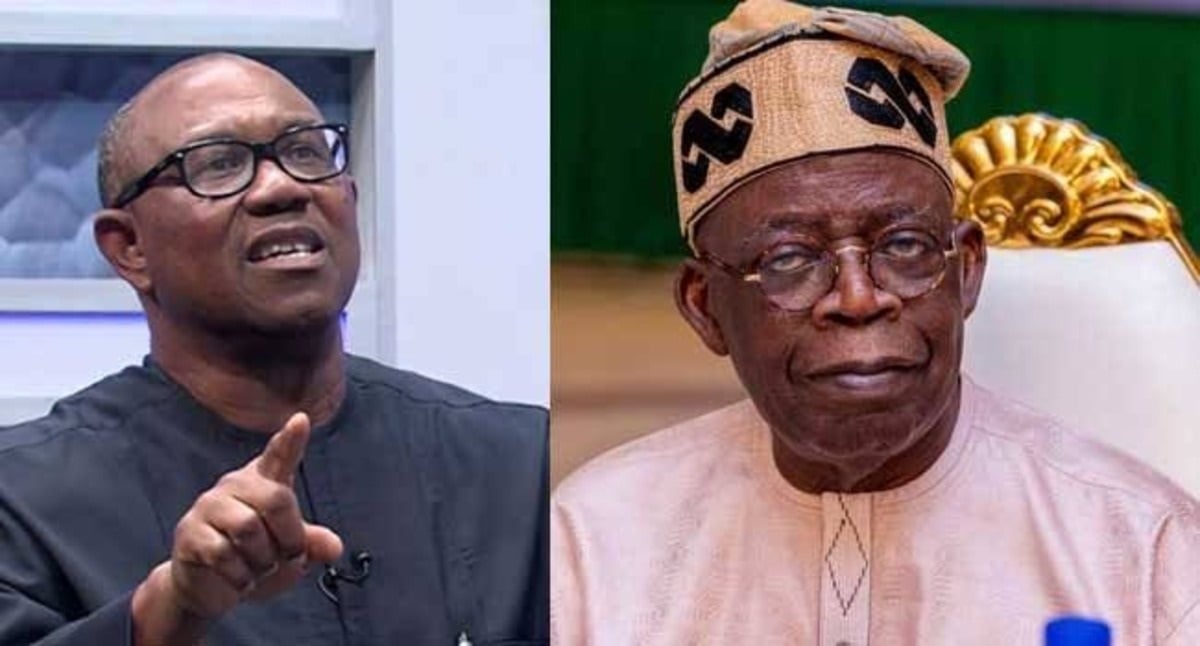
The presidential candidate of the Nigeria Democratic Congress (NDC), Peter Obi, has called on President Bola Ahmed Tinubu to resign, citing British Prime Minister Keir Starmer’s decision to step down as a model of political accountability that Nigerian leaders should emulate.
Obi made the call in a statement posted on X on Monday, hours after Starmer announced outside 10 Downing Street that he would be leaving office, bringing to an end a premiership of less than two years, defined by policy reversals and growing political pressure.
The former Anambra governor drew a direct comparison between Starmer’s situation and Tinubu’s, arguing that both leaders came to power on the back of significant campaign promises they ultimately failed to keep.
He noted that Starmer’s resignation came amid public anger over a sluggish economy, a worsening cost-of-living crisis, and a failure to honour key electoral commitments.
Turning to Nigeria, Obi reminded Tinubu of his own record of demanding that then-President Goodluck Jonathan step down before 2015, particularly after the Chibok schoolgirls kidnapping, on the grounds that the government had failed in its basic duty to protect lives.
He argued that Tinubu made similar promises during the 2023 campaign.
Obi said calling for the president’s resignation was not merely a political statement but a push for a culture of accountability in which public office is treated as a responsibility rather than a privilege.
He argued that only by dismantling a culture of impunity could Nigeria build a future in which leaders understood that failure in office carries real consequences.
He said, “Owning Up to Leadership Failures and Political Responsibility
“This morning, I listened to the British Prime Minister’s speech announcing his planned resignation in July. As a keen observer of global politics, my primary interest lies in examining what successful nations do right and the structural factors that cause others to lag or struggle with governance and development.
“The Prime Minister’s planned resignation comes amid mounting public frustration over a stagnant economy, a worsening cost-of-living crisis, and a perceived failure to honour key campaign pledges.
“Looking inward in our dear country, we can recall our own situation. Before 2015, our President on several occasions championed the call for the then President Goodluck Jonathan to resign over economic hardship and insecurity affecting Nigerians. During the Chibok school kidnapping incident, he demanded the immediate resignation of President Jonathan, arguing that the government had failed in its most fundamental duty of protecting lives.
“During the 2023 election campaign, President Bola Ahmed Tinubu made several promises, including improved electricity supply. He also challenged the electorate not to vote for him for a second term if he failed to deliver on those commitments—particularly in providing stable power, fighting corruption, and improving the welfare of Nigerians.
“At present, however, these conditions have worsened. Electricity supply remains unreliable, insecurity has intensified in many areas, including kidnappings, and economic hardship has deepened rather than eased. Similar concerns are reflected across other critical sectors such as security, infrastructure, transportation, and anti-corruption efforts, all of which have regressed. We are in the worst possible condition.
“I, therefore, join Nigerians of goodwill in calling for the resignation of the President over monumental failure in governance. Such a gesture would help enthrone a political culture rooted in accountability and responsibility, rather than further entrenching impunity. It would also send a powerful message that public office is a sacred trust, not an entitlement, and help build a society in which future leaders understand that failure carries consequences. Only by ending the culture of impunity can we secure a better future for the society our children will inherit in a New Nigeria that is possible. -PO.”
Tribune Online reports that Starmer announced his resignation on Monday, ending a premiership that lasted less than two years and was marked by policy reversals and mounting political pressure.
Speaking outside 10 Downing Street, the Labour leader said every decision he made in office had been guided by what he believed was best for the country. He confirmed that he would step down as Labour Party leader while remaining Prime Minister until a successor is chosen.
According to Starmer, the process of electing a new Labour leader will begin in July, with a replacement expected to take office by September.
He said his departure would allow him to devote more time to his family after serving in what he described as the country’s most demanding public office.
Starmer praised his wife, Vic, for her support throughout his political career and said he also looked forward to spending more time with his children.
The outgoing Prime Minister acknowledged growing pressure within the Labour Party over his leadership and said he had accepted the party’s verdict on whether he remained the best person to lead it into the next general election.


