
Uche Amunike
Lifeandtimes News Writer
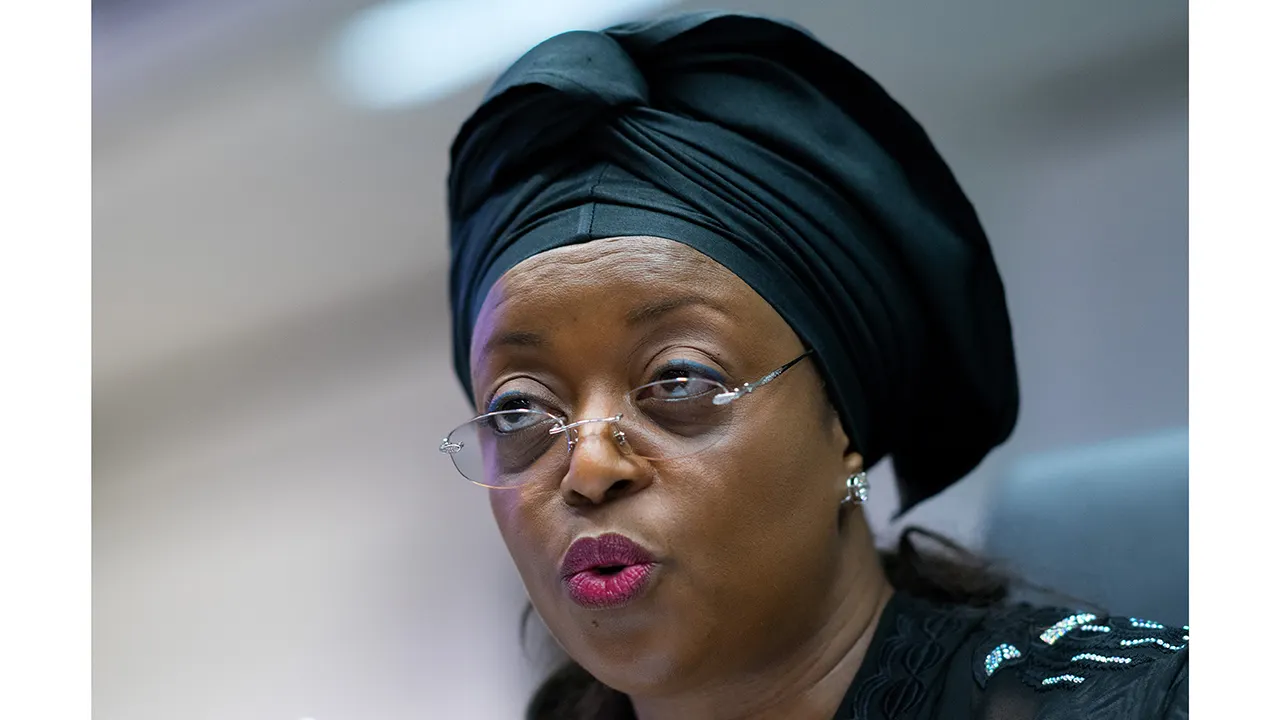
Former Nigerian Minister of Petroleum Resources, Diezani Alison-Madueke, has denied allegations of benefiting from proceeds of bribery and corruption in a United Kingdom Court in exchange for the awards of government contracts.
According to what the 65-year-old Diezani Alison-Madueke told Southwark Crown Court, Monday, she claimed that she ‘tried to push back on corruption in Nigeria, describing the country as one that is grappling with the vice since its colonial era.
According to prosecutors, several Nigerian businessmen funded lavish spending on behalf of Diezani Alison-Madueke, including over £2 million at Harrods and £4.6 million on refurbished properties in London and Buckinghamshire.
The former minister however told the court that such expenses incurred during official engagements and were eventually reimbursed.
Her words: ‘I can state categorically that at no point did I ask for, take or receive a bribe of any sort from these persons and did not abuse my office. I always sought to act impartially.’
She further averred that funds spent on her behalf were refunded by the state-owned Nigerian National Petroleum Company (NNPC).
She also explained that a service company was established in London to manage logistics because of what she described as a disorganized financial structure within the NNPC, stating: ‘They paid for all my hotels, chauffeurs, to allow me to perform the job that I did.’
Diezani Alison-Madueke further told the court that she was not aware at the time that one of her chauffeurs had allegedly delivered £100,000 in cash to her, insisting that the money had nothing to do with her.
The court heard that she rose rapidly through the ranks at Shell, becoming the first female senior executive in its Nigerian operations.
She also said that she initially did not want to work for the multinational company, due to its treatment of her father, a former senior employee who had unsuccessfully challenged the company in court.
Her words: ‘I found the job uncomfortable, to put it mildly.’
She also stated that her father, who was a traditional leader, had once taken legal action against Shell over what she described as ‘apartheid practice’ in West Africa.’
She also criticized the manner in which the company handled oil spills in the Niger Delta, stating that it had not done enough to make good on the devastation that they had caused.
While addressing security concerns, she described Nigeria as a very patriarchal society, stating that having a woman sitting at the helm of affairs, was a major no-no.
She also added that she had faced serious security threats, including the risk of kidnapping, even as members of her family were also abducted at some point.
She denied five counts of accepting bribes and one count of conspiracy to commit bribery.
A 54-year-old oil executive, Olatimbo Ayinde, who was also on trial, denied one count of bribery and another count of bribing a foreign public official, even as Diezani’s 69-year-old brother, Doye Agama, also denied conspiracy to commit bribery.


