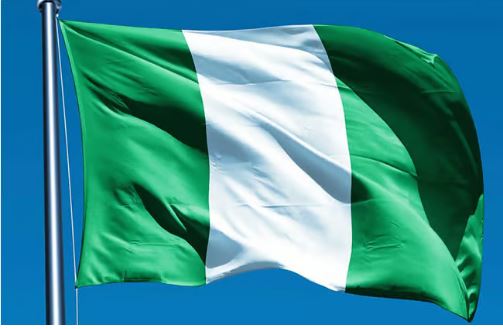
SIXTY-SIX years after flag independence, millions of Nigerians remain hungry. Millions of children are out of school. Infrastructure is grossly inadequate. The country still depends far too heavily on crude oil income.
Nigeria’s resources, including vast arable land, water bodies, oil, gas, solid minerals, a young population, and extraordinary human talent, have yet to translate into the prosperity, security and dignity the people deserve and the founding fathers espoused.
The country’s greatest tragedy is no longer that it has failed to realise its potential. It is that it has become accustomed to failing to realise it.
The political class has shown a disturbing disdain for good governance. Leadership has been anything but visionary. It’s been more about power grabbing, access to the public purse, deceit, sloganeering, and unbridled arrogance.
Yet, it is not that Nigeria has achieved nothing in 66 years. The truth, rather, is that what it has achieved pales distressingly to what it could have achieved.
At 66, there is a pervading sense of despondency, dashed hopes and, more disturbingly, a fragile future.
October 1, 1960 was supposed to mark the beginning of Nigeria’s great national journey. With a functioning parliamentary system, a strong regional structure and an agriculture-powered economy, the country seemed headed towards remarkable prosperity.
The North built an economy around groundnuts, cotton and livestock. The West became synonymous with cocoa and rubber. The East exploited palm oil, palm kernels and extensive trading networks. Agriculture employed the vast majority of the population. The three regions – later four –built schools, roads, hospitals, universities and other infrastructure.
The First Republic wasn’t flawless, it must be said. Ethnic rivalry, electoral manipulation and power struggles tainted it. This eventually contributed to military intervention on January 15, 1966, the suspension of democratic institutions and the devastating Civil War of 1967-1970.
But the First Republic left one unforgettable lesson: regional autonomy can drive rapid development when government and the people have both responsibility and incentives to perform.
Sadly, the military era ended the parliamentary system and destroyed the vibrant regional governments, replacing them with a centralised federation.
Agriculture lost its primacy as attention turned to crude oil. Petrodollars weakened the urgency to diversify the economy.
That false choice has haunted Nigeria ever since.
Fixated on easy oil cash, Nigeria neglected to build the infrastructure, institutions and human capital required to transform the country. Rather, it developed a morbid taste for everything imported, bleeding its resources to sustain others.
The return to civilian rule in 1979 rekindled some hope. But the military soon returned in 1983 as politicians squandered another opportunity to reset the national trajectory.
On June 12, 1993, more than 10 years later, Nigerians voted in large numbers in a presidential election that produced a clear victory for MKO Abiola of the Social Democratic Party.
History will not forget that the Ibrahim Babangida junta annulled the freest and fairest election ever held in Nigeria. Abiola never assumed the presidency. He died mysteriously in detention in July 1998.
A democratic possibility was insidiously aborted. Nigeria has spent decades trying to recover from that indecent, violent assault.
Since 1999, however, democracy has survived. The military has remained in the barracks. Elections have taken place regularly, and government has changed hands peacefully. Civilian rule has become the country’s political norm.
These are achievements that must be acknowledged.