
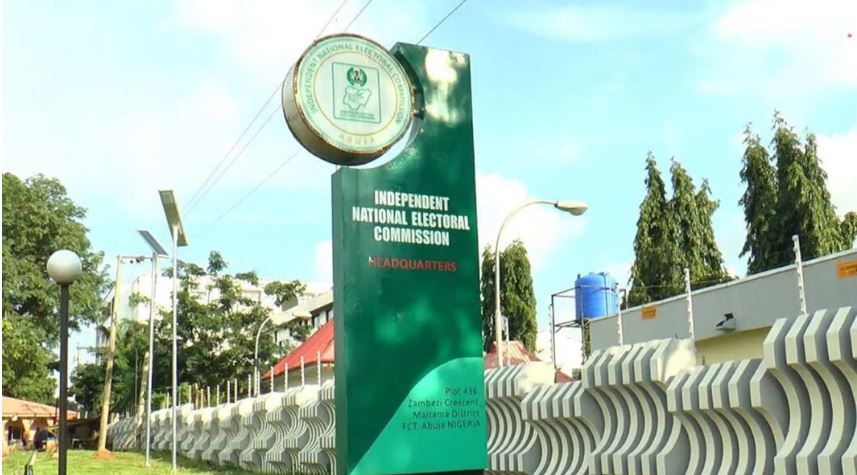
The Independent National Electoral Commission (INEC) has listed 1,303 candidates sponsored by political parties to contest the 109 senatorial seats and the Federal Capital Territory (FCT) senatorial seat in the 2027 general elections.
The list contains candidates from 21 political parties contesting the 109 seats in the Senate, Nigeria’s highest legislative chamber.
The All Progressives Congress (APC) has 109 candidates, the African Democratic Congress (ADC) has 108, and the Nigeria Democratic Congress (NDC) has 94.
The Allied Peoples Movement (APM) has 104 candidates; the Peoples Democratic Party (PDP), 101; the Social Democratic Party (SDP), 95; the Action Democratic Party (ADP), 92; and the Action Peoples Party (APP), 69.
The Labour Party (LP) has 68 candidates; Accord, 67; the National Rescue Movement (NRM), 65; Young Progressive Party (YPP), 60; Zenith Labour Party (ZLP), 51; Action Alliance (AA), 39; the All Progressives Grand Alliance (APGA), 33; National Democratic Party (NDP), 32; Democratic Labour Alliance (DLA), 27; Peoples Redemption Party (PRP), 27; African Action Congress (AAC), 25; New Nigeria Peoples Party (NNPP), 21; Boot Party (BP), seven; and Young Progressives (YP), four.
Prominent candidates
Among the prominent candidates on the list are Godswill Akpabio, the incumbent Senate president; Barau Jibrin, the deputy Senate president; and Adams Oshiomhole, a former governor of Edo State, all of whom are seeking re-election into the upper chamber on APC tickets.
Others seeking re-election who are on the list include Abdulaziz Yari, a former governor of Zamfara State and director-general of President Bola Tinubu’s Campaign Council; Ahmed Lawan, a former Senate president; Seriake Dickson, a former governor of Bayelsa State and national leader of the NDC; Aliyu Wamakko, a former governor of Sokoto State; and Orji Kalu, a former governor of Abia State. They are also seeking a fresh mandate in the upper chamber of the National Assembly.
Natasha Akpoti-Uduaghan, the senator representing Kogi Central, is also on the list, as is Stella Oduah, a former aviation minister and ex-Anambra North senator.
Incumbent governor of Imo State and former senator for Imo West Senatorial District, Hope Uzodimma, also made the list. He is a member of the APC and Secretary of Tinubu’s campaign organisation.
Also on the list are a former Delta State Governor, Ifeanyi Okowa and the incumbent governor of Gombe, Inuwa Yahaya.
The presidential and National Assembly elections are scheduled for 16 January 2027, while the governorship and State Houses of Assembly elections are scheduled for 6 February 2027.
Battle for Senate presidency
Aside from the senatorial contests, the 2027 election is expected to set the stage for another battle for the Senate leadership, with the successful candidates ultimately determining who occupies the Senate Presidency in the 11th National Assembly.
The Senate president, the nation’s number three citizen, is elected by senators from among themselves after the inauguration of a new Senate, meaning the outcome of the 2027 senatorial elections will be crucial to the race for the presiding office.
The contest is already generating political calculations within the APC, with Mr Akpabio widely expected to seek another term in the position if he retains his Akwa Ibom North-West seat.
Mr Akpabio became Senate president in June 2023 after defeating Mr Yari in the contest for the leadership of the 10th Senate and has since presided over the chamber. His return to the Senate would give him the advantage of experience and incumbency in any contest for the leadership of the 11th Senate.
But he is not expected to be without challengers.
Mr Uzodimma is among the politicians whose names have featured in the calculations over the 2027 Senate presidency. Mr Uzodimma previously served as senator for Imo West from 2011 to 2019 before becoming governor in 2020.
The rules governing the emergence of presiding officers have also become part of the political calculations. The Senate had introduced an amendment requiring candidates for presiding offices to be ranking, returning senators, a move that would have affected first-time senators. The controversial provision was, however, rescinded in May 2026 following opposition and constitutional concerns, reopening the possibility of first-time senators participating in the leadership contest.
Another potential contender is Mr Oshiomhole, a former Edo State governor and incumbent senator representing Edo North, whose experience as a former governor, former APC national chairman and returning senator makes him one of the prominent figures capable of influencing the leadership contest.
With several senior politicians seeking seats in the next Senate, the 2027 elections could therefore produce not only a new legislature but also a fresh struggle for control of the chamber.
While Mr Akpabio appears poised to seek a second term as Senate president, the final contest will depend on the composition of the 11th Senate, the zoning arrangement adopted by the APC, and the ability of individual contenders to secure the support of their fellow senators.


